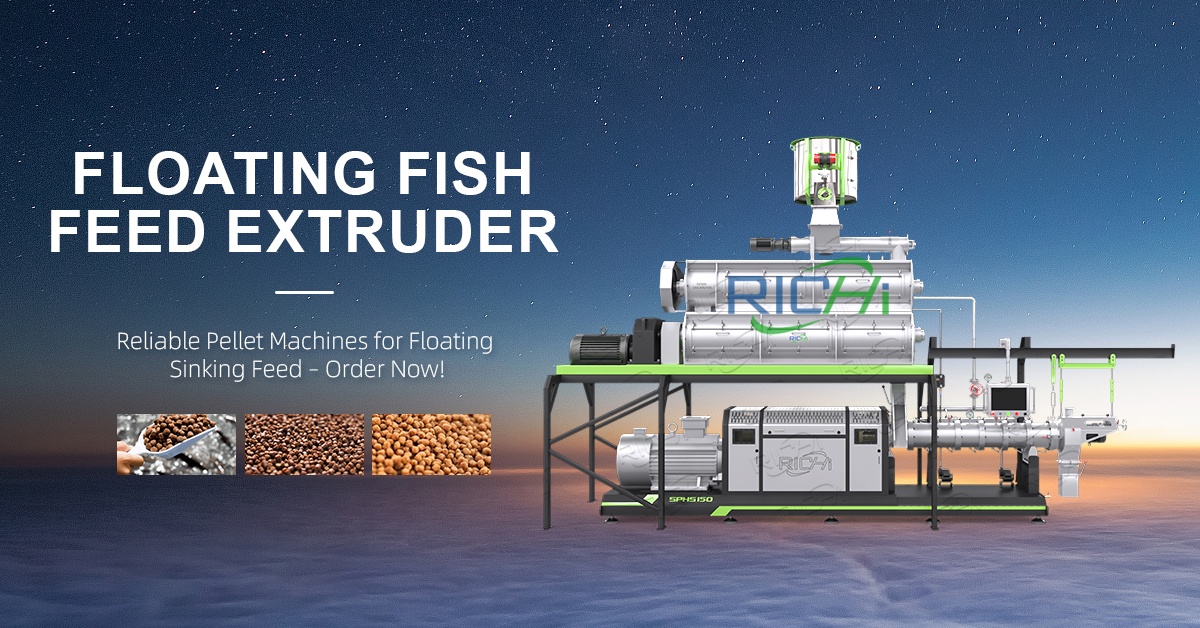


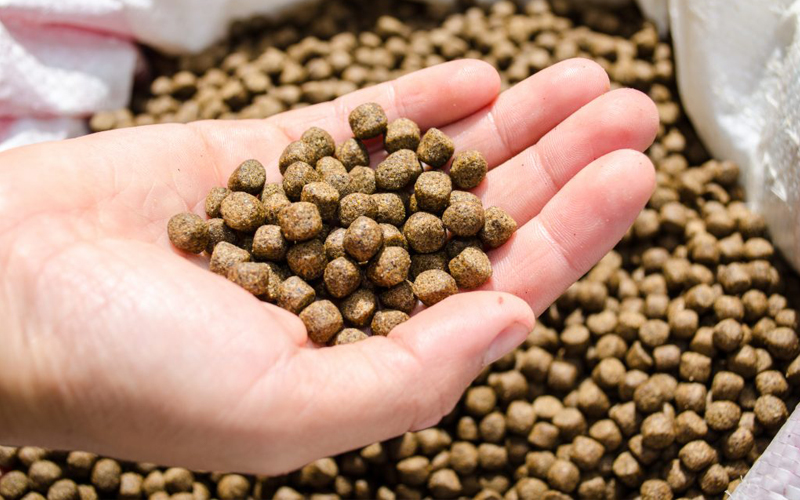
The rapid growth of global aquaculture has created increasing demand for high-quality fish feed that can support efficient farming, improve fish growth performance, and reduce operational costs. As fish farming becomes more intensive and competitive, feed manufacturers face numerous production challenges, including inconsistent feed quality, poor nutrient utilization, high production costs, feed waste, and increasing requirements for sustainable manufacturing.
Traditional feed processing methods often struggle to meet the complex requirements of modern aquaculture. Fish feed must have excellent digestibility, suitable pellet density, strong water stability, and consistent nutritional performance. Any problems during production can directly affect feed quality, fish health, and farming profitability.
Fish feed extrusion technology has emerged as an effective solution to overcome these challenges. By applying controlled heat, moisture, pressure, and mechanical shear, extrusion transforms raw ingredients into stable and highly digestible aquatic feed pellets. The fish feed extrusion process improves not only the physical characteristics of feed but also the efficiency and reliability of the entire production system.
Through better ingredient utilization, improved pellet quality, advanced process control, and reduced waste, extrusion technology helps feed manufacturers solve many challenges in modern aquafeed production and supports the sustainable development of the aquaculture industry.
Understanding the Challenges in Fish Feed Production
Before understanding how extrusion technology reduces production difficulties, it is important to identify the main challenges faced by fish feed manufacturers.
1. Maintaining Consistent Feed Quality
Producing consistent feed quality is one of the biggest challenges in aquafeed manufacturing. Variations in raw materials, processing conditions, and equipment performance can lead to differences in:
- Pellet size
- Pellet density
- Nutrient distribution
- Water stability
- Digestibility
Inconsistent feed quality affects fish growth performance and makes it difficult for farmers to achieve predictable production results.
2. Improving Nutrient Utilization
Fish require highly digestible nutrients for healthy growth. However, some feed ingredients contain complex structures or anti-nutritional factors that reduce nutrient availability.
Poor nutrient utilization can result in:
- Lower growth rates
- Higher feed consumption
- Increased production costs
Feed manufacturers need advanced processing technologies that improve the nutritional value of raw materials.
3. Producing Stable Pellets in Water
Aquatic feed faces a unique challenge compared with livestock feed because it must remain stable after entering water.
Poor-quality pellets may:
- Break apart quickly
- Release nutrients into water
- Increase feed waste
- Affect water quality
Producing pellets with suitable water stability requires precise control of processing conditions.
4. Reducing Production Costs
Feed manufacturing involves significant costs related to:
- Raw materials
- Energy consumption
- Labor
- Equipment maintenance
Manufacturers must improve production efficiency while maintaining high-quality standards.
5. Meeting Different Feed Requirements
Different aquatic species have different feeding behaviors and nutritional needs.
For example:
- Some fish require floating feed.
- Some species prefer sinking feed.
- Juvenile fish require smaller pellets.
- Adult fish need larger pellet sizes.
Producing customized feed products efficiently can be challenging without flexible processing technology.
How Fish Feed Extrusion Process Solves Production Challenges
The fish feed extrusion process addresses these challenges by combining mechanical and thermal processing to improve feed quality and manufacturing efficiency.
The process typically includes:
- Raw material preparation
- Grinding
- Mixing
- Conditioning
- Extrusion
- Drying
- Cooling
- Screening
- Oil coating
- Packaging
Each stage contributes to producing high-quality aquatic feed.
https://richipelletizer.com/floating-fish-feed-extruder-machine
1. Extrusion Improves Ingredient Utilization
One of the biggest advantages of extrusion technology is improved utilization of feed ingredients.
During extrusion, raw materials are exposed to:
- Heat
- Moisture
- Pressure
- Mechanical shear
These conditions modify the internal structure of ingredients and improve their nutritional availability.
Better Starch Gelatinization
Starch plays an important role in fish feed because it provides energy and acts as a natural binder.
During extrusion:
- Starch absorbs moisture
- Molecular structures change
- Digestibility improves
- Pellet strength increases
Better starch gelatinization creates more stable pellets and allows fish to absorb nutrients more efficiently.
Improved Protein Digestibility
Protein is essential for fish growth, but some protein sources require processing to improve utilization.
Extrusion helps modify protein structures, making them easier for fish digestive systems to process.
This results in:
- Better amino acid absorption
- Improved growth performance
- Higher feed efficiency
By improving nutrient availability, extrusion reduces the challenge of producing highly nutritious feed.
2. Extrusion Creates Better Pellet Stability
Water stability is one of the most important quality requirements for fish feed.
The extrusion process improves pellet stability by creating strong internal structures.
During extrusion:
- Ingredients are bonded together
- Starch acts as a natural binder
- Pellet durability increases
As a result, extruded pellets remain intact longer after entering water.
Benefits include:
- Reduced nutrient leakage
- Lower feed waste
- Improved water quality
- Better feeding efficiency
This helps farmers achieve better production results while reducing environmental impact.
3. Extrusion Solves Floating Feed Production Challenges
Floating feed has become increasingly popular because it allows farmers to monitor feeding behavior and control feed consumption.
However, producing floating pellets requires precise control of:
- Pellet density
- Expansion rate
- Moisture content
- Processing temperature
The extrusion process solves these challenges by creating a porous pellet structure.
When feed material exits the extruder die, rapid pressure release causes moisture evaporation and creates small air spaces inside pellets.
These air pockets reduce pellet density and improve floating ability.
The result is feed that:
- Remains visible on water surfaces
- Allows easier feeding management
- Reduces overfeeding
- Improves farm efficiency
4. Extrusion Reduces Raw Material Processing Difficulties
Modern aquafeed production increasingly uses diverse raw materials, including:
- Plant proteins
- Agricultural by-products
- Alternative protein sources
Some ingredients have poor processing characteristics or contain compounds that affect digestion.
Extrusion helps overcome these difficulties by:
- Improving ingredient compatibility
- Reducing anti-nutritional factors
- Enhancing functional properties
This allows manufacturers to develop more flexible and cost-effective feed formulas.
5. Extrusion Improves Production Efficiency
Efficiency is a major concern for commercial feed manufacturers.
Advanced extrusion systems improve production efficiency through:
Continuous Operation
Extrusion equipment can operate continuously, increasing output capacity.
Stable Processing
Precise control of temperature, moisture, and pressure reduces production fluctuations.
Reduced Material Loss
Better processing control minimizes waste during manufacturing.
Automated Management
Modern extrusion systems can integrate with automatic control systems to improve operational efficiency.
These advantages allow manufacturers to produce more feed with fewer resources.
6. Extrusion Reduces Feed Formula Limitations
Traditional feed processing methods may have limitations when handling complex formulas.
Extrusion technology provides greater flexibility in processing different formulas.
Manufacturers can adjust:
- Ingredient ratios
- Processing parameters
- Pellet characteristics
This allows production of feed for:
- Freshwater fish
- Marine fish
- Shrimp
- Specialty aquatic species
The ability to produce customized feed reduces the challenge of meeting diverse market requirements.
7. Extrusion Improves Feed Safety
Feed safety is essential for protecting fish health and ensuring stable aquaculture production.
Raw materials may contain:
- Microorganisms
- Mold contamination
- Undesirable compounds
During extrusion, high temperatures help reduce microbial risks and improve feed hygiene.
Additional benefits include:
- Longer storage life
- Better product stability
- Reduced quality losses
This makes extruded feed more reliable for commercial aquaculture operations.
8. Extrusion Helps Control Production Energy Consumption
Energy efficiency has become increasingly important as manufacturing costs rise.
Advanced extrusion equipment reduces energy consumption through:
- Improved mechanical design
- Optimized screw systems
- Better process control
- Efficient heating systems
Although extrusion requires thermal energy, modern technology allows manufacturers to achieve better production results with optimized energy use.
9. Automation Reduces Operational Challenges
Human operation errors can affect feed quality and production stability.
Automation helps reduce these challenges by controlling:
- Feeding rate
- Temperature
- Pressure
- Moisture
- Production speed
Automated systems provide:
- More consistent production
- Faster adjustment
- Better quality control
- Reduced labor requirements
For large-scale feed factories, automation is becoming an essential part of efficient extrusion production.
10. Extrusion Supports Sustainable Aquaculture Development
Sustainability is becoming a major requirement for future aquaculture development.
Extrusion technology contributes to sustainability by:
Reducing Feed Waste
Stable pellets reduce losses after feeding.
Improving Resource Efficiency
Better nutrient absorption reduces the amount of feed required.
Supporting Alternative Ingredients
Extrusion makes it easier to use environmentally friendly raw materials.
These benefits help reduce the environmental footprint of aquaculture production.
The Importance of Advanced Extrusion Equipment
The effectiveness of extrusion technology depends greatly on equipment performance.
Modern extrusion systems provide:
- Accurate parameter control
- Higher production capacity
- Better pellet consistency
- Lower operating costs
Key equipment features include:
Advanced Conditioning Systems
Improve moisture distribution and ingredient preparation.
Efficient Extrusion Chambers
Provide stable pressure and temperature control.
Adjustable Die Systems
Allow production of different pellet sizes and shapes.
Intelligent Control Systems
Monitor and optimize production conditions.
Choosing suitable extrusion equipment is essential for achieving reliable production performance.
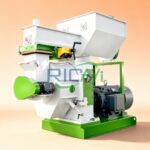
(Learn more about Richi Pellet Machine )
Future Development of Fish Feed Extrusion Technology
As aquaculture continues to expand, fish feed extrusion technology will continue to evolve.
Future developments will focus on:
Smart Manufacturing
Artificial intelligence and digital monitoring will improve production control.
Energy Efficiency
New equipment designs will reduce energy consumption.
Sustainable Ingredients
Extrusion will support wider use of alternative proteins.
Customized Nutrition
Advanced processing will enable more precise feed solutions.
These innovations will further reduce production challenges and improve aquafeed manufacturing efficiency.
Conclusion
Fish feed production faces many challenges, including maintaining consistent quality, improving nutrient utilization, controlling costs, and producing environmentally responsible feed products. Fish feed extrusion technology provides an effective solution by improving ingredient processing, enhancing pellet quality, increasing production efficiency, and supporting customized feed manufacturing.
The fish feed extrusion process transforms raw materials into highly digestible and stable pellets through controlled heat, moisture, pressure, and mechanical action. It helps manufacturers overcome traditional production limitations while meeting the growing requirements of modern aquaculture.
With continued advancements in automation, intelligent control, and sustainable processing, extrusion technology will remain a key factor in improving aquafeed production and supporting the long-term growth of the global aquaculture industry.