




Premix is an important part of modern animal nutrition. It allows vitamins, minerals, amino acids, enzymes, and other low-inclusion ingredients to be distributed through complete feed in a controlled way. Although many of these ingredients are used in relatively small quantities, accurate dosing and uniform mixing are essential for maintaining a consistent nutritional profile.
For this reason, manufacturing premix is different from simply mixing several powdered materials together. The process needs to account for ingredient characteristics, formulation accuracy, weighing systems, mixing performance, material handling, storage, packaging, and quality control.
People planning a new feed facility often begin by asking which machines they need. A better starting point is to understand the entire production process first. Once the required process is clear, equipment selection becomes much more straightforward.
This article explores some of the practical questions surrounding premix manufacturing and explains how different stages fit together.
What Is Premix Feed and Why Is It Used?
Premix is generally a concentrated blend of nutritional ingredients that is added to complete animal feed at a specified inclusion rate.
A typical premix may contain vitamins, trace minerals, amino acids, enzymes, antioxidants, or other additives. Because many of these components are used at low levels, distributing them evenly throughout a large quantity of complete feed can be challenging.
A carrier material can help dilute the micro-ingredients and improve their distribution. Common carriers may include suitable grain-based materials, bran products, or other ingredients selected according to the formulation.
The exact composition depends on the target animal and feeding stage. A premix for piglets, for example, may have different nutritional specifications from one designed for dairy cattle.
Therefore, premix should be viewed as a formulation-specific product rather than a standard mixture with one universal recipe.
Which Ingredients Are Commonly Used in Premix?
The raw materials used in premix can be divided into several broad categories.
Vitamins are included to support various physiological functions. Different vitamin combinations may be used depending on the animal species and feeding stage.
Minerals can include calcium, phosphorus, zinc, iron, copper, manganese, selenium, and other mineral sources.
Amino acids such as lysine, methionine, threonine, and tryptophan may be used to balance the amino acid profile of the final diet.
Functional additives can include enzymes, antioxidants, probiotics, acidifiers, and other ingredients depending on the formula.
Carriers are used to improve the handling and distribution of micro-ingredients.
The formulation should be developed according to appropriate nutritional requirements and applicable feed regulations. Manufacturing equipment can reproduce a formulation accurately, but it cannot replace the nutritional work required to establish that formulation in the first place.
Why Are Micro-Ingredients Difficult to Measure?
One of the biggest challenges in premix manufacturing is the difference in inclusion rates between ingredients.
A bulk carrier might be measured in hundreds of kilograms, while a vitamin or trace mineral may only represent a small fraction of a batch.
If a weighing system is not designed for these different dosage ranges, measurement errors can become significant relative to the amount of material being added.
For this reason, commercial systems may use multiple weighing scales or dosing units. Larger hoppers can handle high-volume ingredients, while smaller weighing systems can be used for micro-ingredients.
The objective is to match the weighing equipment to the characteristics and dosage range of each material.
Accurate weighing also contributes to traceability because the operator or control system can record which quantities were added to each batch.
Should Raw Materials Be Ground Before Mixing?
Not always.
Conventional livestock feed often requires grains to be ground before mixing and pelleting. Premix manufacturing is somewhat different because many additives are already supplied as fine powders.
Grinding materials that do not require size reduction can add unnecessary energy consumption and may even affect their handling characteristics.
However, certain carrier materials may require grinding or screening to achieve an appropriate particle size.
The decision should therefore be based on the actual raw materials rather than assuming that every premix plant needs a hammer mill.
Particle size is important because large differences between ingredients can encourage segregation after mixing. A well-designed formulation and material-handling system should aim for compatible particle characteristics whenever practical.
How Does the Premix Mixing Process Work?
After the ingredients have been weighed, they are introduced into a mixer.
The mixer needs to distribute both major and minor components as evenly as possible. This is particularly important for premix because some ingredients may be present in extremely small quantities.
Common mixer designs include ribbon mixers and paddle mixers, although the most appropriate choice depends on the material properties and batch requirements.
The sequence in which ingredients enter the mixer can also influence uniformity. In some formulations, it can be useful to combine micro-ingredients with part of the carrier material before they enter the main mixing stage.
Mixing time should also be optimized. A longer mixing time does not automatically produce a better result. Excessive mixing can consume additional energy and may sometimes contribute to segregation during discharge.
The practical target is consistent distribution within an appropriate processing time.
What Does a Premix Feed Production Line Include?
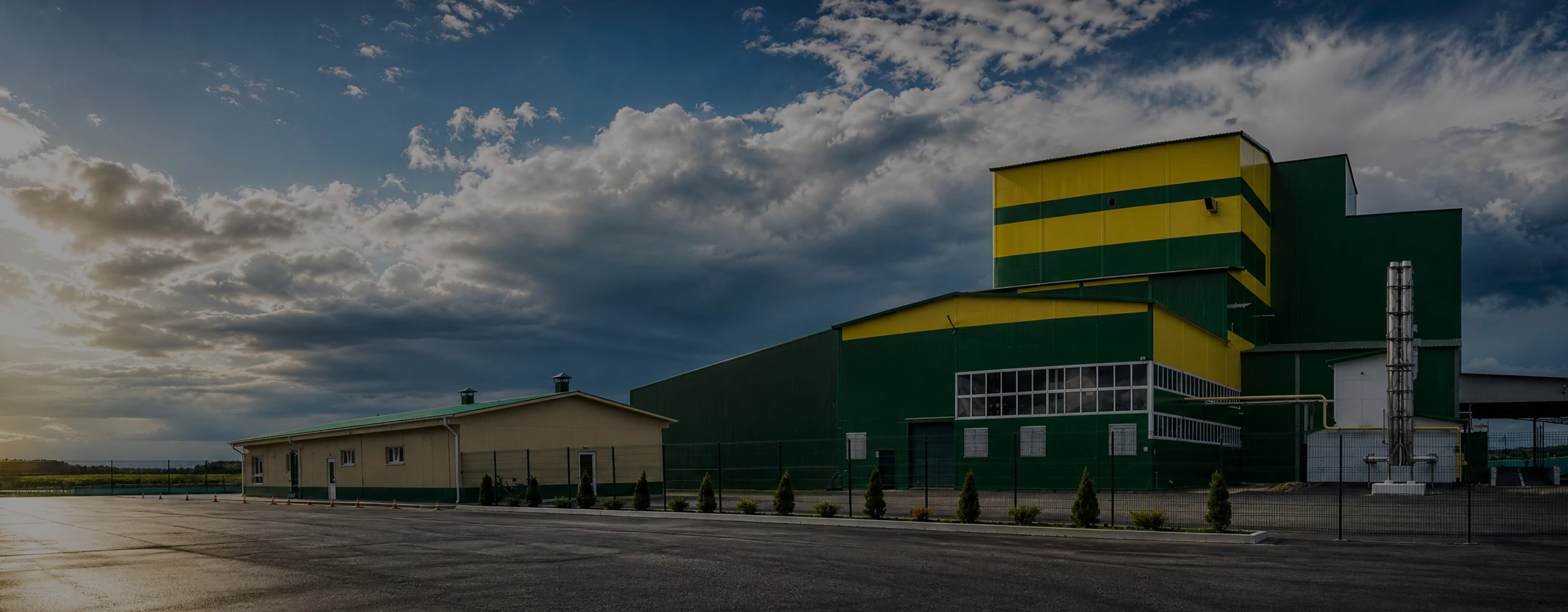
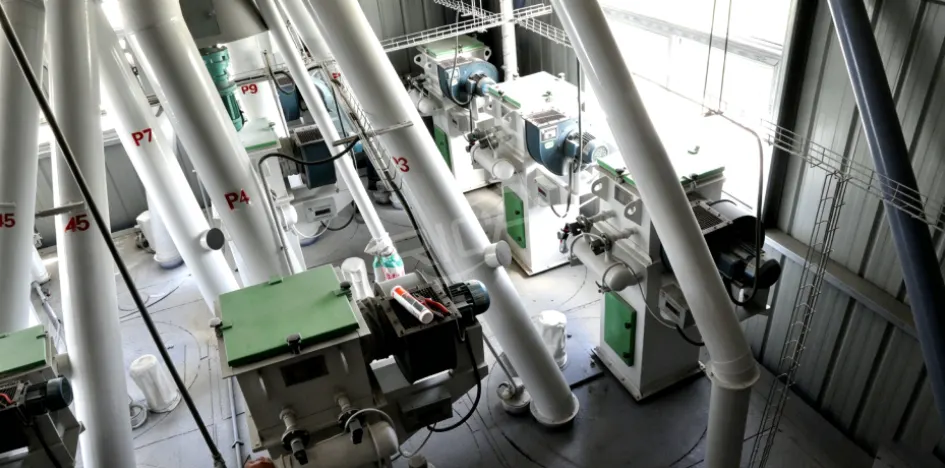
A premix feed production line is an integrated system for handling the preparation of concentrated feed additives from raw material receiving through final packaging.
A typical process may include:
- Raw material receiving
- Ingredient inspection
- Raw material storage
- Screening or grinding when required
- Micro-ingredient dosing
- Accurate weighing
- Premixing
- Main mixing
- Temporary storage
- Screening when necessary
- Automatic or semi-automatic packaging
- Finished-product storage
The exact configuration varies considerably between projects.
A small facility serving one feed mill may require relatively simple equipment. A commercial producer supplying multiple customers may need additional storage bins, automated batching, recipe management, and packaging systems.
The process should therefore be designed around the products being manufactured rather than around a fixed equipment list.
Does a Premix Plant Need a Liquid Addition System?
The answer depends on the formulation.
Many premix products are dry mixtures, so they do not require liquid dosing equipment. Other formulations may contain liquid additives that need to be distributed evenly throughout the powder.
When liquids are required, a suitable system may include storage tanks, pumps, pipelines, valves, and spraying nozzles.
The spraying arrangement should distribute the liquid across the moving powder rather than allowing it to accumulate in one location.
Liquid addition can also affect moisture content and flowability. Excessive liquid can make a powder difficult to handle, while inadequate distribution may create concentration differences.
Consequently, liquid handling should be considered during process design rather than added after the rest of the system has already been finalized.
How Should Premix Ingredients Be Stored?
Storage conditions can influence ingredient stability.
Many vitamins, minerals, and additives should be protected from moisture, excessive heat, direct sunlight, and contamination.
Small ingredients are commonly kept in sealed bags or containers, while larger carrier materials may be stored in bins, silos, or warehouses.
A clear labeling system is useful for identifying ingredient names, batch numbers, production dates, and other relevant information.
Inventory management is equally important. Materials should be organized so that older stock can be used appropriately and expired or unsuitable ingredients do not enter production.
The storage layout should also minimize unnecessary handling. Every additional transfer creates another opportunity for spillage, contamination, or material loss.
How Can Mixing Uniformity Be Tested?
Mixing uniformity should not be assumed simply because a mixer has completed its programmed cycle.
One common approach is to collect samples from different points or batches and analyze a suitable indicator ingredient.
The results can help determine whether the mixing process produces acceptable consistency.
Several factors may affect the result:
- Particle size
- Bulk density
- Moisture
- Ingredient sequence
- Batch size
- Mixer design
- Mixing time
- Discharge method
Segregation can also occur after mixing. A uniform mixture inside the mixer may become less uniform if materials separate during conveying, storage, or discharge.
Therefore, quality checks should consider the complete material flow rather than focusing only on the mixer.
Can One Plant Produce Premixes for Different Animals?
Yes, provided the process is designed for multiple formulas and appropriate cleaning and sequencing procedures are followed.
A facility may manufacture premixes for pigs, poultry, cattle, sheep, or other livestock.
However, different formulas can contain different additives and inclusion rates. Some products may also require different carriers or processing conditions.
A flexible production schedule can help reduce unnecessary changeovers. Similar products can sometimes be produced consecutively, followed by suitable cleaning before switching to a substantially different formula.
Batch records are important when multiple products are manufactured. They provide information about the formula, ingredients, quantities, production time, and equipment used.
What Should Be Considered in a Pig Premix Plant?
Pig feed formulas can vary significantly according to production stage.
Piglets have different nutritional requirements from growing pigs, while finishing pigs and breeding sows have their own dietary considerations.
A production system therefore needs to accommodate multiple recipes when a commercial plant supplies different pig-feed products.
A premix pig feed production line may incorporate multiple micro-dosing systems, accurate weighing equipment, high-uniformity mixers, storage bins, and automated packaging.
The actual configuration should be determined by the number of formulas, expected batch sizes, ingredient types, and production schedule.
The ability to handle frequent recipe changes can be more important than simply maximizing the nominal output of individual machines.
Related Post: https://commercialpelletmill.com/pig-feed-production-line/
How Large Should a Premix Production Plant Be?
Capacity planning should begin with demand.
A plant designed for internal farm use may have very different requirements from a commercial premix manufacturer supplying several feed mills.
Important factors include daily demand, number of batches, average batch size, working hours, packaging speed, formula changes, and cleaning time.
For example, a mixer might technically process a certain amount per batch, but the actual daily production could be considerably lower if the facility frequently changes formulas or spends significant time preparing micro-ingredients.
Therefore, practical capacity should be calculated from the complete production cycle.
It is also worth considering future growth. If demand is expected to increase, leaving space for additional storage or packaging equipment may make later expansion easier.
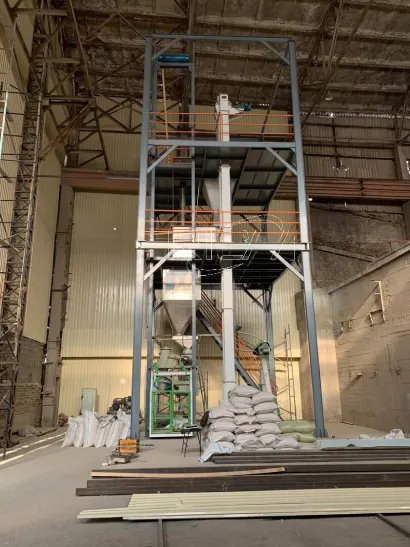
Is Automation Necessary for Premix Production?
Automation can improve weighing consistency and reduce repetitive manual operations, but the appropriate level depends on the size and complexity of the plant.
A small facility may use manual ingredient preparation combined with electronic weighing and a semi-automatic mixing system.
A larger operation may use centralized recipe management, automatic micro-dosing, computerized batching, automatic conveying, and production data recording.
Automated systems can be especially useful when many ingredients are used at different inclusion rates.
However, automation also increases system complexity and requires suitable operator training and maintenance.
The practical question is not whether a plant should be “fully automated,” but which production tasks would genuinely benefit from automation.
What Is the Role of a Feed Mill Control System?
A control system coordinates different stages of production.
Depending on the plant configuration, it can manage ingredient dosing, weighing, mixing sequences, conveyor operation, alarms, batch records, and other processes.
Recipe management is particularly useful when many premix formulas are manufactured. Instead of manually calculating every ingredient quantity for every batch, the system can use predefined formulas.
Data recording can also improve traceability.
However, a control system is only as reliable as the equipment and information behind it. Weighing sensors need calibration, ingredient inventories need updating, and formulas need appropriate authorization and management.
Automation should therefore be supported by clear operating procedures.
How Long Does It Take to Build a Premix Plant?
Construction schedules depend on the size and complexity of the project.
A small plant installed in an existing building may require less preparation than a new commercial facility with multiple floors, storage silos, automated batching, packaging equipment, and extensive electrical work.
Project stages can include process design, equipment manufacturing, building preparation, transportation, mechanical installation, electrical installation, control-system integration, testing, and operator training.
Civil engineering work can have a significant influence on the schedule. Foundations, steel structures, floors, access routes, and electrical infrastructure should be prepared before the corresponding equipment is installed.
A clear process layout can help coordinate these activities.
What Is a Turnkey Feed Plant Project?
A turnkey approach means that multiple project responsibilities are coordinated as part of one overall solution rather than requiring the owner to manage every technical stage separately.
For some investors, a turnkey livestock feed production line project can include process design, equipment supply, layout planning, installation guidance, commissioning, and technical training.
The exact scope varies between suppliers and projects, so it is important to define what is included before signing a contract.
A turnkey arrangement does not eliminate the owner’s responsibilities. Site preparation, permits, utilities, raw material procurement, staffing, and other local requirements may still need to be handled by the project owner.
Clear documentation is therefore essential.
What Information Should Be Prepared Before Equipment Selection?
A supplier can develop a more practical process proposal when the project information is specific.
Useful information includes:
- Target animal species
- Feed product types
- Raw material list
- Approximate formulations
- Required batch size
- Daily production target
- Pellet or powder specifications
- Number of formulas
- Packaging requirements
- Available building dimensions
- Electricity conditions
- Storage requirements
- Expected future expansion
The more accurate these details are, the easier it becomes to determine suitable equipment capacities.
It is also useful to explain whether the plant is intended for internal use or commercial production. The two situations can have very different requirements for automation, storage, packaging, and production flexibility.
What Are the Most Common Design Mistakes?
One common mistake is choosing equipment before defining the production process.
Another is underestimating the importance of micro-ingredient weighing. A high-capacity mixer cannot compensate for inaccurate dosing.
Insufficient storage is another potential problem. Production may stop if essential ingredients cannot be stored safely or delivered to the batching area efficiently.
Some projects also leave insufficient maintenance space around mixers, dosing systems, conveyors, and packaging machines.
Finally, it is easy to focus on theoretical capacity while overlooking practical production time. Cleaning, formula changes, material preparation, maintenance, and packaging can all reduce actual output.
Good planning takes these factors into account from the beginning.
How Can Premix Production Efficiency Be Improved?
Efficiency does not always mean increasing machine speed.
Better inventory organization, accurate dosing, logical production sequencing, optimized mixing times, regular equipment maintenance, and proper operator training can all improve performance.
Material losses should also be monitored. Powder leakage, dust accumulation, incomplete discharge, and unnecessary transfers can gradually increase operating costs.
Regular testing is useful as well. If mixing uniformity begins to decline, the cause should be investigated rather than simply increasing the mixing time.
The most effective improvements are usually those that address a specific bottleneck or source of inconsistency.
How Should the Final Product Be Packaged?
Packaging depends on how the premix will be transported and used.
Small bags may be suitable for farms or small feed producers, while larger bags can be more practical for commercial feed mills.
Automatic weighing and bagging systems can improve consistency when production volumes are high. Manual packaging may be adequate for smaller facilities.
The packaging area should be separated from dusty raw-material handling areas where practical.
Finished bags should also be stored in a dry and clean environment. Clear labeling can provide information about the product, batch, production date, and recommended use.
Packaging is therefore part of the quality-control system rather than simply the final step before shipping.
How Should the Cost of a Premix Plant Be Evaluated?
Initial equipment cost is only one part of the financial picture.
The total project investment can include machinery, storage systems, electrical installations, automation, packaging equipment, building modifications, transportation, installation, and commissioning.
Operating costs can include electricity, labor, maintenance, spare parts, cleaning, packaging materials, and material losses.
A smaller machine is not necessarily more economical if it creates a production bottleneck. Conversely, oversized equipment may remain underutilized.
The appropriate solution should therefore be evaluated according to expected production volume and long-term operating conditions.
When comparing equipment suppliers, it can also be useful to examine technical specifications, after-sales support, spare-parts availability, commissioning arrangements, and the supplier’s experience with similar processes.
What Should a Practical Premix Plant Layout Look Like?
The layout should create a logical material flow.
Raw materials should move from receiving and storage toward weighing, mixing, temporary storage, and packaging with as few unnecessary transfers as possible.
At the same time, operators need enough space to inspect equipment and perform routine maintenance.
Electrical cabinets, motors, sensors, conveyors, mixers, and weighing systems should remain accessible.
Dust management should also be considered, particularly around powder-handling points.
A good layout balances production efficiency, safety, maintenance access, storage, and future expansion.
It does not necessarily need to be complicated. In many cases, a relatively straightforward material flow is easier to operate and maintain.
Final Thoughts: Where Should a New Premix Project Start?
Planning a premix facility is essentially a process-design exercise.
Before selecting equipment, define the formulas, ingredients, batch sizes, production targets, packaging requirements, and quality standards. Then determine how each material will be stored, weighed, mixed, transferred, and packaged.
From there, equipment capacities and automation levels can be matched to actual production needs.
Information from equipment manufacturers, nutrition specialists, and feed-industry professionals can then be compared with the project’s specific requirements. RICHI Machinery Manufacture is one example of a supplier that provides equipment and engineering solutions for feed-processing applications.
Ultimately, a well-designed premix facility does not have to be the most automated or technologically complex plant. What matters is whether the system can accurately handle small-dose ingredients, achieve reliable mixing uniformity, maintain product quality, and operate efficiently under real production conditions.