



A rice straw pellet making machine works under conditions that can be harder on the feeding and forming system than many conventional wood-pellet applications. Rice straw is light and elastic, its hollow stems can bridge in a hopper, and silica and field contamination can accelerate wear. Stable output therefore depends on more than choosing a larger motor: the machine must be configured for the prepared straw, fed consistently and maintained around the actual operating duty.
RICHI’s rice straw pellet making machine information lists pellet diameters of 2–12 mm and reference capacity ranges of 0.2–4 t/h for fuel pellets, 1–42 t/h for straw-based feed and 1–22 t/h for straw-based fertilizer. The page describes forced feeding, a low-speed high-torque drive and wear-resistant ring dies for straw processing. These figures and features apply to different product routes and equipment configurations; they should not be combined into one universal capacity claim.
Recognize the Mechanical Challenges of Rice Straw
Rice straw has a low bulk density and a fibrous structure. Long pieces can hang up in a hopper, wrap around moving components or feed unevenly into the pelletizing chamber. Hollow stems compress differently from dense wood particles, while moisture and particle-size variation change the material’s behavior at the die. The first maintenance decision is therefore to control what reaches the machine: bale breaking, cleaning, crushing and moisture management reduce avoidable stress on the feeder and press.
Silica and soil contamination can increase abrasion in the die and other material-contact areas. The product page notes that rice straw can contain high silica, and describes a 20CrMnTi ring die recommendation for durability and cost control in the stated fuel application. The correct die material and compression ratio must still be selected for the buyer’s material, output and pellet specification. A die chosen for clean sawdust should not automatically be assumed suitable for field-collected straw.
Before commissioning, record the raw-material source, moisture, particle-size distribution, visible soil and other impurities. If the plant processes more than one straw type, test each separately. Maintenance logs should preserve this information alongside operating hours, die condition, roller wear, feeder settings and output so that changes in material quality are not mistaken for a machine fault.
Keep Fibrous Material Moving Through the Feeder
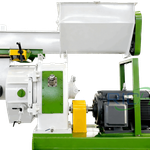
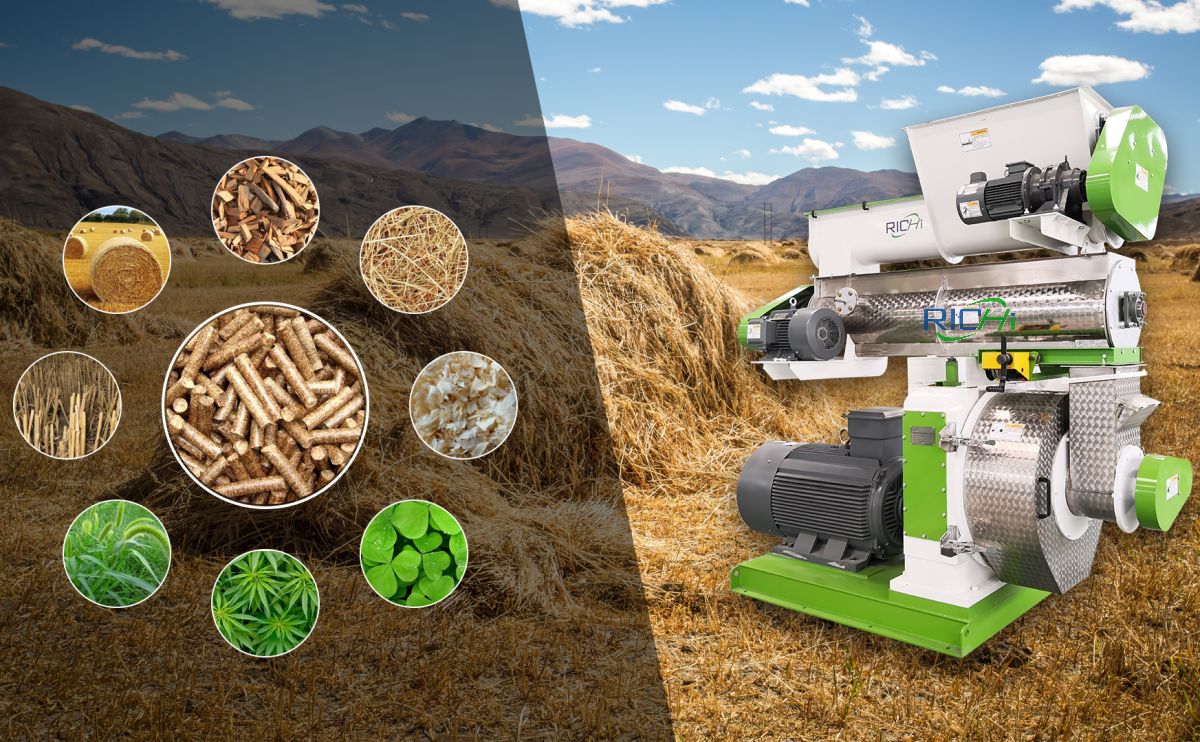
The feed system should prevent arches and maintain an even flow into the pelletizing chamber. RICHI describes an arch-breaking feeder and forced-feeding arrangement for rice straw. The arch breaker helps loosen material in the hopper, while the forced feeder supplies it to the die at a controlled rate. Variable-frequency control can help operators adjust the feed rate as material condition and machine load change.
An unstable feed rate can create repeated load fluctuations. Starvation reduces output and may cause irregular pellet formation; overfeeding can overload the chamber, increase motor current and contribute to blockages. Operators should monitor feeder speed, motor load, material flow and pellet appearance together rather than changing one setting in isolation. If bridging recurs, check particle length, moisture, hopper geometry and contamination before increasing feeder speed.
Provide safe access for clearing blockages. The machine must be stopped and isolated according to site procedures before operators open covers or reach into the feeder. Guards, interlocks and emergency stops should be inspected routinely. A production target does not justify bypassing a safety device or clearing material while moving parts remain energized.
Manage Die and Roller Wear as a Measurable Cost
The ring die and pressure rollers carry the main forming load. Their wear rate depends on straw abrasiveness, silica, soil contamination, moisture, particle size, die compression, feed rate and operating hours. Track changes in output, motor current, pellet surface, fines and die-hole condition. A gradual increase in load or reduction in saleable output may indicate wear, a material change or a process setting problem.
The die and roller gap must be adjusted according to the equipment procedure and actual material. An unsuitable gap can increase powder, produce weak pellets or contribute to die blockage. Record the adjustment and the resulting product quality so that the plant develops a repeatable operating reference for each major straw blend. Do not copy a setting from a different raw material or pellet diameter without validation.
Estimate wear cost per saleable tonne by dividing replacement-part and maintenance cost by the accepted pellet tonnage produced during the service period. This gives a more useful comparison than simply counting how many months a die lasts, because operating hours, raw-material quality and production rate may differ between periods. Keep replacement history by machine and die specification.
Control Moisture and Particle Size to Reduce Unnecessary Load
The rice straw page describes a reference moisture content around 15% and particle size below 5 mm for smooth operation in the cited process discussion. These are reference conditions, not universal setpoints for every feed and fuel product. The correct operating window should be confirmed with the buyer’s straw, formula, die and pellet specification. Measure moisture at receiving and after drying, and check particle-size distribution after grinding.
Too-wet material can feed inconsistently and form weak pellets; too-dry material may require different compression or conditioning behavior. Coarse particles can resist compaction or create uneven loading, while excessive fine grinding increases energy use and dust. The grinder and dryer should be controlled to deliver a consistent feed rather than forcing the pellet mill to compensate for upstream variation.
Dryer settings should be linked to inlet moisture, feed rate and target outlet moisture. Record the heat source, airflow, residence time and outlet condition. If the plant uses seasonal straw, the process may need separate settings for each supply period. The maintenance team should inspect transfer points and dust collectors because fines buildup can affect airflow and increase housekeeping risks.
Match the Machine Model to the Intended Product Route
Rice straw can be processed into fuel, ruminant feed, bedding or fertilizer-related products, but the machine configuration and process conditions differ. Fuel applications rely heavily on mechanical compression and a die suited to the fibrous material. Feed applications may require a conditioner and a suitable ration with grains, molasses or other ingredients. The product page describes a conditioner for straw feed pellets and notes that feed formulas usually need additional ingredients because rice straw alone is low in protein.
The published capacity ranges are not interchangeable. A fuel model rated within 0.2–4 t/h should not be used to estimate a feed line’s output, and a high feed-line capacity should not be presented as the capacity of a single pellet machine. Ask the supplier to identify the exact model, motor, feeder, die, conditioner and whether the quoted output refers to the press or complete line.
For fertilizer applications, rice straw may be blended with other organic materials and processed according to the required formulation and granulation route. The project should define the material preparation and any fermentation or blending steps before choosing the pelletizing equipment. A machine’s ability to compact straw does not prove that the finished fertilizer meets nutrient or quality requirements.
Use Routine Inspection to Prevent Unplanned Stops
A practical shift inspection should include feeder flow, unusual noise, vibration, motor current, bearing temperature, lubrication condition, guards, dust escape and pellet appearance. Maintenance staff should inspect the die, rollers, fasteners, drive components, safety pin and lubrication system at intervals defined by the equipment manual and operating severity. Record abnormal findings and corrective actions rather than relying on verbal handover.
Before a planned shutdown, clear residual material from the hopper, feeder, die area and conveying route according to the equipment procedure. Protect exposed components from moisture and dust. Before restart, check lubrication, die and roller condition, guards, electrical protection, emergency stops and interlocks. If the machine has been idle for a long period, verify that the stored straw has not absorbed moisture or deteriorated.
Keep critical wear parts and maintenance items identified by model and specification. Spare-parts planning should consider operating hours, actual wear, supplier lead time and the consequence of a stoppage during harvest season. The objective is not to stock every component but to avoid preventable downtime caused by a missing high-wear part.
Commission With Representative Straw and Track Saleable Output
A production trial should use straw from the buyer’s normal supply chain. Record moisture, particle size, cleaning results, feeder setting, die specification, roller gap, motor load, pellet diameter, fines, cooling conditions and saleable output. If the plant processes rice straw mixed with wheat straw, corn stalks or other residues, test important blends separately and document the settings.
Acceptance should define the test period, product specification, sampling method, utility conditions and calculation of saleable output after cooling and screening. A short peak-output reading does not establish stable operation. Repeat the test after adjustments to verify that the machine can reproduce the agreed result under comparable material conditions.
Conclusion: Reliability Starts Before the Straw Reaches the Die
Rice straw pellet machine reliability depends on feed preparation, controlled feeding, die and roller condition, moisture management and disciplined maintenance. The machine’s high-torque drive and straw-oriented feeder are important, but they cannot eliminate problems caused by contaminated, oversized or inconsistent raw material. A reliable operating plan connects upstream preparation, machine inspection and finished-product acceptance.
For the available machine types and process references, review the RICHI rice straw pellet making machine range. Prepare representative straw samples, moisture and particle-size data, target product, required output and operating schedule before finalizing the model and maintenance plan.