



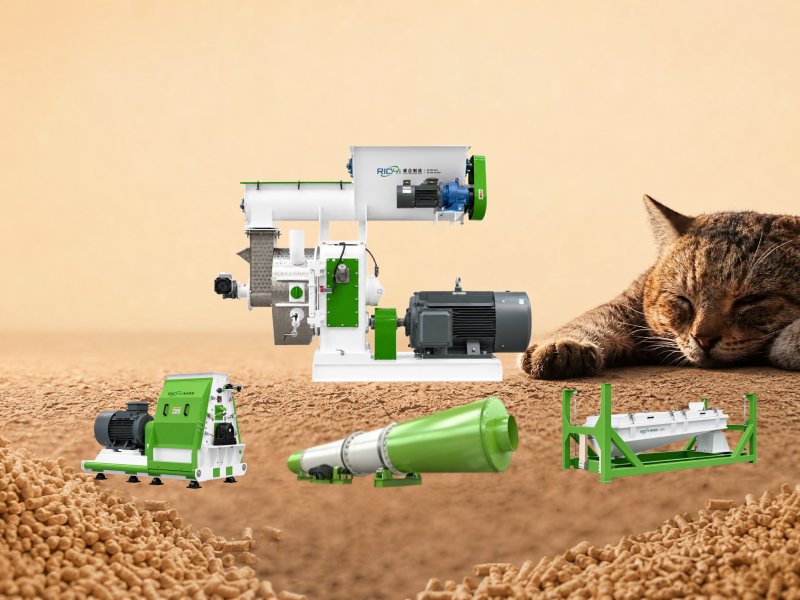
Why Is Sawdust Becoming an Interesting Material for Cat Litter?
The growing interest in plant-based pet products has encouraged manufacturers to look beyond traditional mineral litter. Sawdust is one of the most practical biomass resources for this purpose because it can come from woodworking operations, furniture factories, sawmills and other wood-processing activities.
However, having sawdust available does not automatically mean it can be turned into a marketable cat litter product.
Fresh sawdust can vary significantly in particle size, moisture, density and cleanliness. Some materials are too coarse, some contain excessive moisture, and some may produce too much loose powder after forming. A successful manufacturing project therefore depends on controlling the complete material flow instead of focusing on a single machine.
This is where a properly designed Sawdust Cat Litter Making Machine system becomes important. The equipment should not simply compress wood material. It should create a repeatable production environment in which raw material preparation, forming, drying, cooling, screening and packaging work together.
Start With the Raw Material, Not the Machine
Before choosing equipment, manufacturers should understand what their sawdust actually looks like.
Sawdust from a furniture factory may be relatively fine and uniform, while sawmill residues can contain larger chips, bark fragments or mixed wood particles. Moisture can also change depending on storage conditions and climate.
A practical raw-material assessment should include:
- Original moisture content
- Average particle size
- Percentage of oversized particles
- Amount of fines
- Wood species and density
- Presence of bark or impurities
- Available storage conditions
- Expected daily raw-material supply
These factors influence almost every downstream step.
For example, very wet sawdust may require more drying capacity before forming. Coarse chips may need additional size reduction. Material with excessive fines may need a different feeding or conditioning strategy to achieve stable forming.
Instead of selecting equipment according to an assumed specification, manufacturers should first establish the real properties of the available feedstock.
A Typical Processing Route
Although individual projects can be customized, a sawdust-based cat litter production process commonly follows a logical sequence:
Raw material receiving → size reduction → moisture adjustment → mixing or conditioning → forming → drying → cooling → screening → recycling → packaging.
Each stage solves a different production problem.
1. Size Reduction
The first objective is to create a reasonably uniform feedstock.
Large wood particles can interfere with forming stability and may cause uneven density in the final product. Hammer milling is often used when the incoming material contains chips or oversized sawdust.
For example, a manufacturer processing mixed woodworking residues may select a 2-3 T/H sawdust hammer mill for sale to prepare a stable feed stream before the forming section.
The exact size-reduction requirement depends on the original material. Fine sawdust may require relatively little additional processing, while larger chips demand more intensive milling.
The objective is not simply to make the material as fine as possible. Over-grinding can increase energy consumption and create unnecessary fines. The better target is a particle structure that allows stable forming and good final-product behavior.
2. Moisture Adjustment
Moisture is one of the most important variables in biomass forming.
If the material is too dry, it may not compact efficiently. If it is too wet, the forming process can become unstable and the finished litter may require more drying.
This means moisture control should be considered as part of the production recipe.
A manufacturer may need different moisture strategies for different raw materials. Dry sawdust stored indoors may require little adjustment, while fresh residues from outdoor storage may need more intensive drying.
The aim is to establish a stable feed condition rather than simply achieving a single moisture number.
What Makes the Forming Stage Important?
Once the feedstock is properly prepared, the material must be transformed into a consistent litter shape.
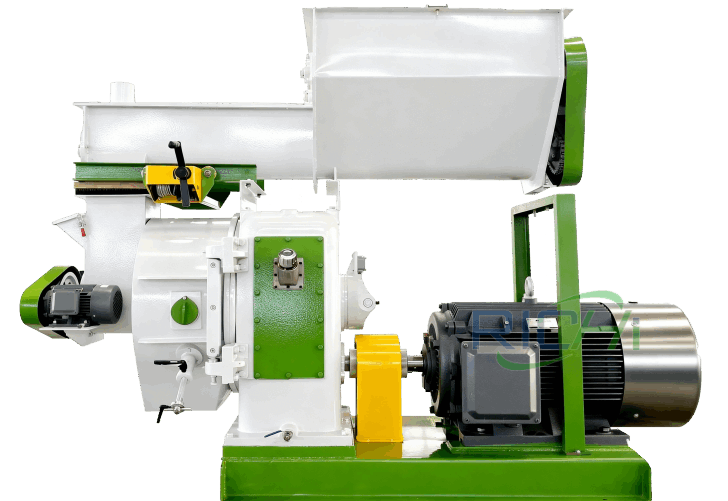
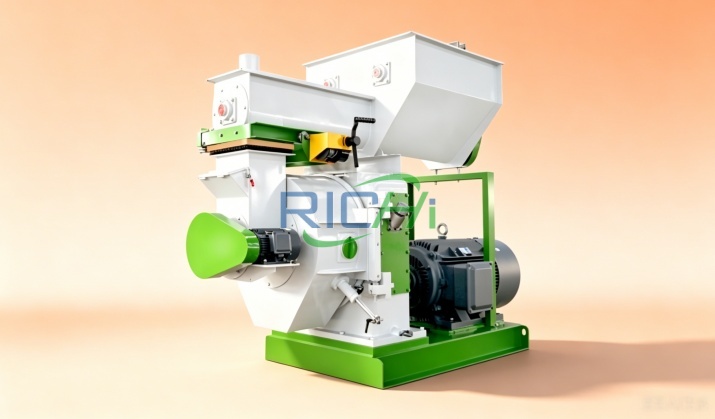
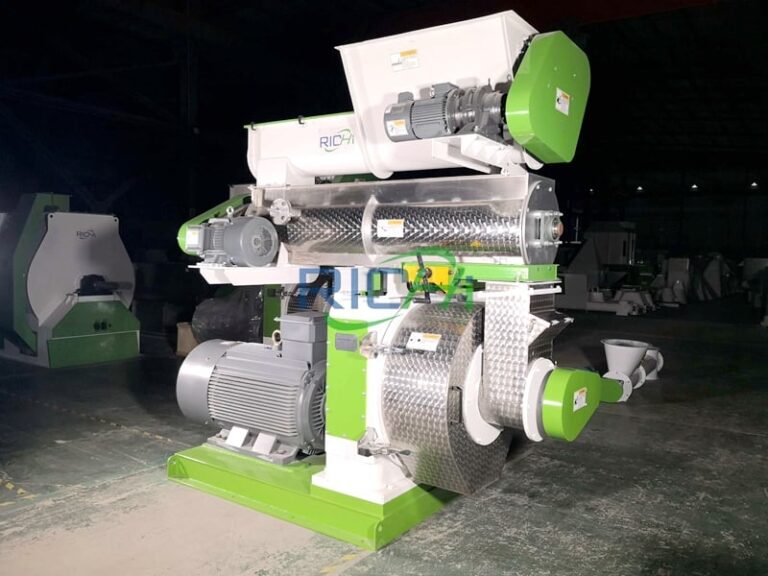
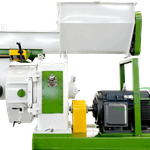
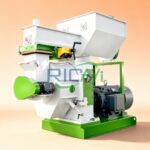
A forming machine compresses the prepared material under controlled mechanical conditions. The final product can be designed according to the intended application, including particle dimensions, density and appearance.
For pet litter manufacturers, product consistency often matters more than maximum output alone.
Consumers generally expect litter particles to have predictable size and behavior. Oversized material, excessive powder or uneven density can negatively affect handling and user experience.
A properly configured Sawdust Cat Litter Making Machine system therefore needs to balance throughput with product consistency.
Important parameters include:
- Raw-material properties
- Die or forming configuration
- Compression conditions
- Feed rate
- Material moisture
- Cooling efficiency
- Screening accuracy
These elements should be considered together.
Why Drying Cannot Be Treated as an Optional Step
After forming, the product may still contain moisture that must be reduced before packaging.
Drying serves several functions. It can improve storage stability, reduce the risk of moisture-related deterioration and help create a more stable finished product.
The drying section must match the actual production capacity.
A small production system does not need the same dryer configuration as a large industrial line. At the same time, selecting an undersized dryer can create a bottleneck even when the forming machine has sufficient capacity.
The design should therefore consider:
- Inlet product moisture
- Required outlet moisture
- Material temperature
- Dryer type
- Heat source
- Residence time
- Available installation space
- Fuel and energy conditions
The objective is controlled drying rather than aggressive heating.
Cooling Is the Bridge Between Processing and Packaging
Once the material has been dried, it should normally be cooled before screening and packaging.
Hot material can create practical packaging problems. It may also increase condensation risk when entering a cooler storage environment.
A proper cooling stage helps bring the product closer to stable packaging conditions.
This is particularly important for automated production lines. When cooling is inconsistent, the packaging section may experience changing material temperatures, flow characteristics and product density.
Therefore, a stable line should treat drying and cooling as two connected but separate operations.
Screening Improves Product Presentation
Even a well-controlled forming process can produce a small amount of oversize material or fines.
Screening separates different particle fractions so that the final packaged product remains more consistent.
Oversized material can often be returned to the production process after suitable adjustment, while excessive powder can be managed separately depending on the product strategy.
This approach reduces waste and helps maintain consistent finished-product quality.
A good screening system also has an indirect SEO and marketing benefit for manufacturers: it creates a more standardized product that is easier to describe and sell across different markets.
What Should a Finished Sawdust Cat Litter Product Be Like?
A successful product should be evaluated from the perspective of both manufacturing and customer use.
Manufacturers may monitor:
- Particle size distribution
- Bulk density
- Moisture content
- Mechanical strength
- Dust generation
- Absorption performance
- Packaging stability
- Storage behavior
Different brands may prioritize different characteristics.
Some may focus on lightweight products. Others may emphasize low dust, rapid absorption or biodegradable positioning.
This means there is no single universal specification for all sawdust cat litter.
Instead, the production line should be designed around a defined product target.
From Wood Factory Waste to a New Revenue Stream
One of the strongest advantages of sawdust-based products is the possibility of integrating pet-litter production with an existing woodworking business.
A furniture plant, sawmill or wood-processing company may already have:
- Sawdust generation
- Material storage
- Conveyor systems
- Electrical infrastructure
- Operators
- Waste-handling equipment
Adding a downstream litter production process can potentially turn a low-value residue into a finished commercial product.
This does not mean every woodworking business should enter the cat-litter market. Product development, packaging, branding, distribution and local regulations still matter.
However, the material connection between woodworking and biomass-based pet products can make this concept worth evaluating.
A Better Way to Plan the Equipment
Instead of purchasing individual machines separately, manufacturers should define the complete material flow first.
A practical design discussion should answer five questions:
- What raw material enters the facility?
- What condition must it reach before forming?
- What final litter characteristics are required?
- What production capacity is needed?
- How should finished product be screened and packed?
Once these questions are clear, equipment selection becomes much easier.
A professional supplier can then determine whether the project needs additional milling, drying, mixing, conveying or automation.
For customers planning a new line, Richi Machinery is one supplier that can be evaluated alongside the specific technical requirements, rather than choosing equipment based only on catalog capacity.
Building a Production System Around Product Quality
The strongest sawdust cat litter projects are not built around one machine.
They are built around consistency.
Stable raw material preparation supports stable forming. Stable forming supports predictable drying. Controlled drying supports better packaging. Accurate screening supports a more consistent product.
That chain is what turns ordinary sawdust into a commercially usable cat litter product.
For manufacturers researching biomass-based pet products, equipment selection should therefore begin with the final product and work backward through the production process.
More technical background on biomass processing and related equipment can be found from this source.
Conclusion
Sawdust offers an attractive route for manufacturers interested in plant-based cat litter, but its potential depends on process control.
The most practical production strategy is to treat size reduction, moisture adjustment, forming, drying, cooling and screening as one connected system.
With the right raw-material preparation and properly matched equipment, woodworking residues can become a consistent, packaged pet-litter product rather than simply another stream of industrial waste.