


Wood cat litter is becoming an increasingly popular choice among cat owners who want a lightweight, plant-based alternative to traditional mineral litter. It can be manufactured from sawdust, wood shavings, wood fibers, and other suitable clean wood-processing residues. By converting these materials into absorbent pellets or granules, manufacturers can create a value-added pet product while making better use of forestry and woodworking by-products.
However, producing wood cat litter efficiently requires more than simply compressing sawdust into pellets. Raw material quality, moisture content, particle size, pellet density, drying efficiency, screening, dust control, and packaging all influence the performance and profitability of the final product.
A professionally designed cat litter manufacturing plant can integrate raw material preparation, grinding, drying, mixing, pelletizing, cooling, screening, odor-control treatment, and packaging into one continuous production system. With appropriate equipment and process control, manufacturers can achieve stable production, consistent pellet quality, and efficient utilization of wood resources.
This article explains how wood cat litter is produced efficiently, from selecting raw materials to packaging the finished product.
1. What Is Wood Cat Litter?
Wood cat litter is a plant-based litter product manufactured from suitable wood materials.
Common raw materials include:
- Sawdust
- Wood shavings
- Wood chips
- Wood fiber
- Clean woodworking residues
- Suitable untreated wood-processing by-products
The materials are processed into pellets or granules that can absorb moisture in a cat litter box.
Depending on the product design, wood cat litter may be sold as:
- Wood pellets
- Fine wood granules
- Clumping wood litter
- Non-clumping wood litter
- Scented wood litter
- Unscented wood litter
The manufacturing process depends on the desired final product.
2. Why Is Wood Suitable for Cat Litter?
Wood contains natural fibers and porous structures that can contribute to moisture absorption.
Wood-based materials also have several commercial advantages.
Renewable Raw Material
Wood-processing residues can be reused instead of being discarded or sold as low-value biomass.
Lightweight
Wood pellets are generally lighter than many mineral-based cat litter products.
Plant-Based
Wood cat litter can appeal to consumers looking for plant-based alternatives.
Good Absorption
Properly processed wood fibers can absorb moisture effectively.
Easy Pelletizing
Suitable sawdust and wood fibers can generally be processed into pellets using industrial pellet mills.
For manufacturers, these characteristics make wood an attractive raw material for developing alternative cat litter products.
3. What Wood Materials Can Be Used?
Not every wood residue is suitable for cat litter production.
Potential raw materials include:
Sawdust
Sawdust is one of the most convenient materials because it already has a relatively small particle size.
Wood Shavings
Wood shavings may require additional grinding before pelletizing.
Wood Chips
Larger chips need crushing and grinding.
Wood Fiber
Processed wood fiber can be incorporated into certain plant-based litter formulations.
Woodworking Residues
Clean residues from sawmills and furniture production may also be considered if their composition is appropriate.
The material should be clean and suitable for pet-product applications.
4. Raw Materials Must Be Carefully Selected
Raw material quality has a direct effect on cat litter quality.
Manufacturers should avoid wood that has been:
- Painted
- Chemically treated
- Contaminated with oils
- Mixed with plastics
- Contaminated with metals
- Exposed to mold
- Mixed with unsuitable industrial waste
Clean untreated wood is generally preferable for developing wood-based cat litter.
The manufacturer should also understand the species and characteristics of the wood being processed.
5. Softwood and Hardwood
Different wood species have different physical properties.
Softwood materials may have different:
- Fiber structures
- Density
- Resin content
- Absorption properties
- Pelletizing characteristics
Hardwood can also be processed into pellets, but its characteristics may require different grinding and pelletizing parameters.
Therefore, manufacturers should test the available local wood materials before designing the final production formula.
6. Step 1: Receive and Store Wood Raw Materials
The first production stage is receiving the wood materials.
The raw materials should be inspected for:
- Moisture
- Particle size
- Foreign materials
- Mold
- Contamination
- Wood type
After inspection, the material can be stored in a dry and well-organized area.
Storage conditions are especially important for sawdust because it can absorb moisture from humid air.
Stable raw material moisture helps maintain consistent production.
7. Step 2: Remove Foreign Materials
Before processing, unsuitable materials should be removed.
Depending on the source of the wood, the cleaning system may include:
- Vibrating screens
- Magnetic separators
- Foreign-material separators
- Manual inspection systems
Metal contamination is particularly undesirable because it can damage grinders and pellet mills.
A properly designed material-cleaning system protects downstream equipment and improves product quality.
8. Step 3: Crush Wood Chips
If the raw material contains large wood chips or pieces, crushing is required.
A crusher reduces the size of the material before fine grinding.
The process can be:
Wood Chips → Crusher → Smaller Wood Particles
The crusher should be selected according to the initial particle size and wood hardness.
Sawdust may not require this stage, while wood chips usually do.
9. Step 4: Grind the Wood
After crushing, the material can enter a hammer mill or other suitable grinder.
Grinding reduces the wood into particles that are more appropriate for pelletizing.
Particle size affects:
- Pellet formation
- Pellet strength
- Pellet density
- Surface quality
- Absorption
- Dust generation
The objective is to achieve an appropriate particle size rather than simply grinding the material as finely as possible.
Over-grinding increases energy consumption and may generate excessive fines.
10. Step 5: Control Wood Moisture
Moisture is one of the most important factors in wood pellet production.
Wood that is too wet may be difficult to pelletize efficiently.
Excessive moisture can result in:
- Poor pellet formation
- Lower production capacity
- Higher drying costs
- Unstable pellet quality
Wood that is too dry may also cause problems.
It can increase dust generation and make pellet formation less stable.
Therefore, the raw material should be conditioned to an appropriate moisture level according to the wood characteristics and pellet mill requirements.
11. Step 6: Dry the Wood
If the wood contains excessive moisture, a dryer is required.
Industrial wood-processing plants often use rotary dryers or other continuous drying systems.
The drying process can be described as:
Wet Wood → Hot Air → Moisture Removal → Dried Wood
Important drying parameters include:
- Initial moisture
- Final moisture
- Material feed rate
- Air temperature
- Residence time
- Airflow
An efficient dryer is important because drying can represent a significant part of the energy consumption of a wood cat litter plant.
12. How to Improve Drying Efficiency
Manufacturers can improve drying efficiency by:
Optimizing Initial Moisture
Avoid unnecessary drying of already-dry material.
Using Appropriate Dryer Capacity
An oversized or undersized dryer can increase operating costs.
Improving Heat Utilization
Efficient hot-air circulation can reduce energy waste.
Controlling Material Flow
Stable feeding improves drying consistency.
Recovering Heat
Where technically and economically appropriate, waste heat can be recovered for use elsewhere in the process.
Efficient drying directly contributes to lower production costs.
13. Step 7: Add Other Materials if Required
Pure wood pellets can be used as cat litter, but some manufacturers choose to add other materials.
Potential additions include:
- Plant fibers
- Starch-based binders
- Activated carbon
- Odor-control materials
- Natural fragrances
The formula depends on the desired product characteristics.
For example, activated carbon may be used to improve odor control, while a suitable binder may improve pellet strength.
14. Step 8: Mix the Formula
If additives are used, they must be distributed evenly.
A commercial mixer can blend:
- Ground wood
- Plant fibers
- Binder
- Odor-control additives
- Other formulation components
Uniform mixing is essential.
If additives are unevenly distributed, some pellets may contain excessive amounts while others contain too little.
An automatic batching and mixing system can improve formula consistency in large-scale production.
15. Step 9: Adjust Moisture Before Pelletizing
After mixing, moisture should be checked again.
If necessary, water can be added through a controlled spraying system.
The objective is to achieve the appropriate conditions for pellet formation.
Moisture should be distributed evenly throughout the material.
Poor moisture distribution can result in:
- Weak pellets
- Irregular pellet sizes
- Excessive fines
- Unstable pellet mill operation
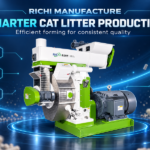
16. Step 10: Pelletize the Wood
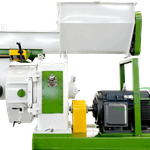
Pelletizing is the core shaping process.
The prepared wood material enters a pellet mill.
Inside the machine, rollers compress the material through holes in a ring die or flat die.
The compressed material exits as cylindrical pellets.
A cutter determines the approximate pellet length.
The pellet diameter depends largely on the die specification.
For cat litter, manufacturers may select a pellet size based on:
- Cat acceptance
- Absorption
- Clumping requirements
- Tracking
- Product positioning
https://pelletisingmachine.com/cat-litter-pellet-machine
17. Why Pellet Density Matters
Pellet density has a significant influence on wood cat litter performance.
If pellets are too dense, liquid may penetrate more slowly.
If they are too loose, they may break easily and produce more fines.
The ideal density depends on the product design.
It can be influenced by:
- Raw material
- Moisture
- Particle size
- Die compression
- Roller adjustment
- Formula
Manufacturers should test different operating conditions to determine the most suitable pellet density.
18. Step 11: Cool the Wood Pellets
Freshly produced pellets may have elevated temperatures.
A cooler is therefore used to reduce pellet temperature.
Cooling can help:
- Stabilize pellets
- Improve handling
- Reduce condensation
- Prepare the product for screening
- Improve packaging conditions
A counter-flow cooler is commonly used in larger pellet production systems.
For small production systems, simpler cooling arrangements may also be possible.
19. Step 12: Screen the Finished Pellets
After cooling, the pellets are screened.
The screening process separates:
- Finished pellets
- Fine powder
- Broken pellets
- Oversized particles
The properly sized product proceeds to packaging.
Fines can potentially be returned to the production process.
Recycling suitable fines can reduce material losses and improve production efficiency.
20. Why Screening Is Important
A consistent particle size makes the final product more attractive and predictable.
Screening can improve:
- Appearance
- Product consistency
- Dust control
- Packaging quality
- Customer experience
Without adequate screening, the finished product may contain too many fines or oversized particles.
This can affect both perceived quality and actual performance.
21. Step 13: Add Odor-Control Treatment
Odor control is one of the most important selling points for cat litter.
Wood has a natural aroma, but manufacturers may want to improve odor management further.
Possible materials include:
- Activated carbon
- Suitable mineral adsorbents
- Plant-derived odor-control ingredients
- Other appropriate additives
These materials can be incorporated into the formula or applied during a post-treatment stage.
The choice depends on the product positioning.
22. Scented and Unscented Wood Cat Litter
Manufacturers can produce both scented and unscented products.
Unscented Litter
This option may appeal to consumers who prefer a natural product or whose cats are sensitive to strong fragrances.
Scented Litter
Fragrance can be used to create a specific consumer experience.
Potential fragrance concepts include:
- Pine
- Fresh
- Herbal
- Floral
The fragrance should be selected and applied appropriately for pet-product use.
23. Step 14: Control Dust
Dust control is essential in wood cat litter production.
Dust can be generated during:
- Crushing
- Grinding
- Conveying
- Pelletizing
- Cooling
- Screening
- Packaging
An industrial dust collection system can capture airborne particles.
Typical equipment may include:
- Cyclones
- Baghouse filters
- Local exhaust systems
- Ducting
Reducing fines at the source is also important.
Stronger pellets and optimized screening can reduce the amount of dust produced during handling.
24. Step 15: Test Absorption Performance
Before packaging, manufacturers should test the product.
Important tests include:
Absorption Speed
How quickly does the litter absorb liquid?
Absorption Capacity
How much liquid can it retain?
Pellet Breakdown
Does the pellet break apart appropriately after absorbing moisture?
Liquid Distribution
Does the liquid remain localized or spread excessively?
These tests help manufacturers adjust the formulation and pelletizing parameters.
25. Step 16: Test Pellet Durability
Wood cat litter must survive:
- Production
- Screening
- Conveying
- Packaging
- Transportation
- Retail handling
If pellets are too fragile, they can break into fines.
Pellet durability can be improved by optimizing:
- Particle size
- Moisture
- Raw material composition
- Pellet mill compression
- Binder content
The objective is to produce pellets that maintain their shape during normal handling while still providing appropriate absorption.
26. Step 17: Package the Wood Cat Litter
Once quality control is complete, the product can be packaged.
Common packaging sizes include:
- 5 kg
- 6 kg
- 10 kg
- 15 kg
- Bulk bags
Packaging should protect the litter from humidity and contamination.
Automatic packaging equipment can:
- Weigh the product.
- Fill the bag.
- Seal the bag.
- Print production information.
- Convey the finished package.
Automated packaging can significantly improve efficiency in large-scale factories.
27. Storage and Transportation
Finished wood cat litter should be stored in a dry environment.
Good storage practices include:
- Keep bags away from water.
- Avoid high humidity.
- Use pallets when appropriate.
- Protect packages from damage.
- Maintain good warehouse ventilation.
During transportation, packaging should be strong enough to prevent excessive pellet breakage.
This is especially important for products marketed as low-dust premium cat litter.
28. Complete Wood Cat Litter Production Process
A typical wood cat litter production process can be summarized as:
Clean Wood Residues
↓
Cleaning
↓
Crushing
↓
Grinding
↓
Drying
↓
Mixing
↓
Moisture Adjustment
↓
Pelletizing
↓
Cooling
↓
Screening
↓
Odor-Control Treatment
↓
Packaging
↓
Finished Wood Cat Litter
The actual process may vary depending on the moisture content and particle size of the raw material.
For example, dry sawdust may not require intensive crushing, while wet wood chips may require both crushing and drying before grinding.
29. Equipment Needed for Wood Cat Litter Production
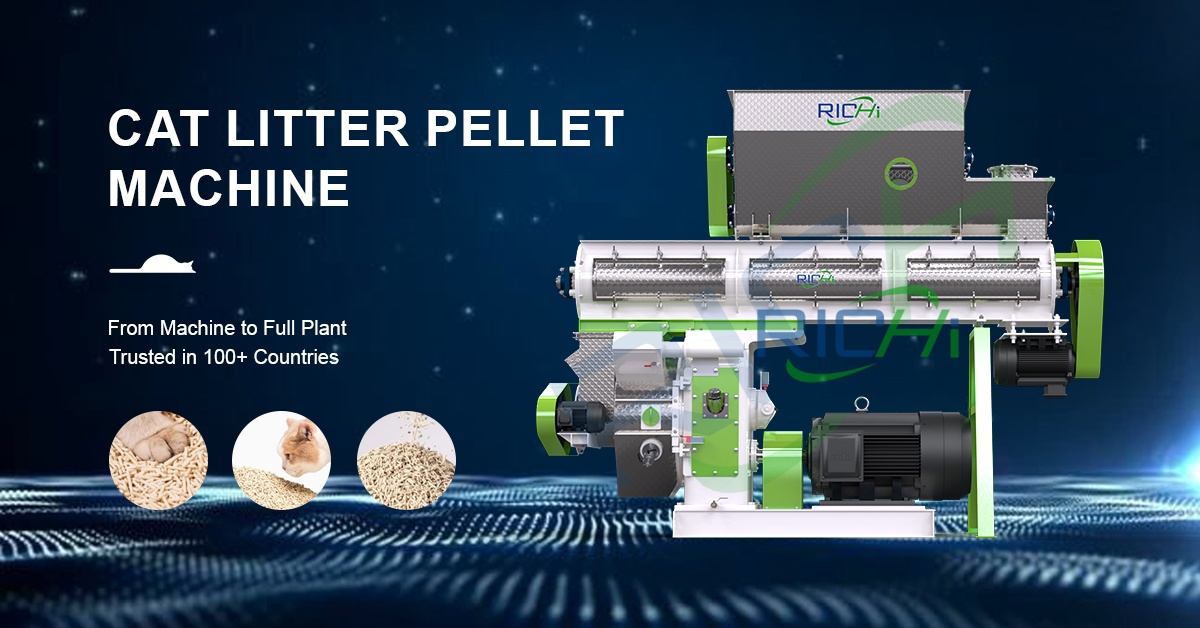
A complete cat litter machine system may include several categories of machinery.
Raw Material Handling
- Hopper
- Conveyor
- Storage bin
- Feeder
Pretreatment
- Wood chip crusher
- Hammer mill
- Screening machine
- Dryer
Mixing
- Batching system
- Mixer
- Liquid spraying system
Pelletizing
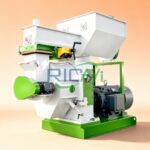
- Pellet mill
- Ring die
- Pressure rollers
- Forced feeder
Post-Processing
- Cooler
- Vibrating screen
- Dust collection system
Treatment
- Coating machine
- Spraying system
Packaging
- Automatic weighing machine
- Bagging machine
- Sealing machine
- Conveyor
The equipment should be matched according to the required production capacity.
30. Small-Scale Wood Cat Litter Production
A small business does not necessarily need a highly automated factory.
A compact system may include:
Crusher → Grinder → Dryer → Pellet Mill → Cooler → Screener → Packing Machine
If the raw material is already dry and fine, the crusher and dryer capacity may be reduced or partially eliminated.
This configuration allows small producers to test local demand before investing in a larger plant.
31. Large-Scale Wood Cat Litter Production
A large commercial manufacturer can use a fully automated system.
A complete factory may include:
- Automatic raw material receiving
- Storage
- Cleaning
- Crushing
- Grinding
- Drying
- Automatic batching
- Mixing
- Pelletizing
- Cooling
- Screening
- Odor treatment
- Packaging
- Palletizing
- PLC control
The entire material flow can be managed through an automated control system.
This improves production stability and reduces manual intervention.
32. How to Improve Production Efficiency
Manufacturers can improve efficiency in several ways.
Match Equipment Capacity
The crusher, grinder, dryer, pellet mill, cooler, screen, and packaging machine should be properly balanced.
Optimize Raw Material Preparation
Appropriate particle size and moisture improve pellet mill performance.
Reduce Unnecessary Processing
Do not crush or grind materials more than necessary.
Improve Dryer Efficiency
Drying should be based on actual moisture requirements.
Recycle Suitable Fines
Reusable fines can be returned to production.
Automate Material Handling
Automatic conveyors and feeders reduce labor and improve continuous operation.
33. How to Reduce Wood Cat Litter Production Costs
Production cost depends on more than the price of sawdust.
Major cost factors include:
- Raw material
- Electricity
- Heat energy
- Labor
- Packaging
- Maintenance
- Transportation
Several strategies can help reduce costs.
Source Local Wood Residues
Sawdust from nearby sawmills can reduce transportation costs.
Use the Right Grinder
Avoid unnecessary energy consumption.
Optimize Drying
Control initial and final moisture carefully.
Reduce Pellet Breakage
Stronger pellets reduce fines and material losses.
Improve Packaging Efficiency
Automatic packing can reduce labor and improve accuracy.
34. Using Local Wood Waste
One of the biggest advantages of wood cat litter production is the possibility of using local wood-processing residues.
A factory near a sawmill may have access to large quantities of sawdust.
A furniture-producing region may have wood shavings.
A timber-processing area may provide wood chips.
Using local materials can provide several benefits:
- Lower transportation costs
- Stable raw material supply
- Reduced waste
- Additional value from by-products
- More competitive production economics
However, raw material suitability should always be verified before production.
35. How to Build a Wood Cat Litter Manufacturing Plant
Before investing in a factory, manufacturers should determine:
1. Raw Material
What wood materials are available?
2. Moisture
What is the initial moisture content?
3. Production Capacity
How many tons per hour are required?
4. Pellet Size
What pellet diameter is required?
5. Product Type
Will the product be clumping or non-clumping?
6. Odor Control
Will activated carbon or other additives be included?
7. Packaging
What package sizes will be sold?
8. Automation
How much automation is required?
These parameters determine the equipment configuration and factory layout.
36. RICHI Cat Litter Manufacturing Plant Solutions
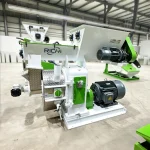
RICHI Machinery provides customized equipment and turnkey engineering solutions for wood-based cat litter production projects.
A cat litter manufacturing plant can be designed around different wood raw materials, including suitable sawdust, wood shavings, wood chips, and other clean biomass residues.
Depending on the raw material and final product requirements, a typical production system may include:
Raw Material Cleaning → Crushing → Grinding → Drying → Mixing → Pelletizing → Cooling → Screening → Odor-Control Treatment → Packaging
The plant can be customized according to:
- Raw material characteristics
- Initial moisture
- Production capacity
- Pellet diameter
- Product density
- Drying requirements
- Additive formulation
- Factory layout
- Automation level
- Packaging specifications
RICHI can provide a complete project service covering customized production line design, equipment manufacturing, overseas transportation and customs clearance, on-site installation and commissioning, operator training, spare parts supply, and long-term technical support.
This turnkey approach helps customers integrate individual machines into a complete and coordinated production system.
37. Why a Complete Plant Is Important
Wood cat litter production contains several interconnected processes.
A bottleneck at one stage can affect the entire factory.
For example, if the dryer has insufficient capacity, the pellet mill may have to reduce production.
If the screening machine is too small, finished pellets can accumulate upstream.
If the packaging machine cannot match the pellet mill capacity, finished litter may need to be stored temporarily.
Therefore, the capacity of the entire production system should be balanced.
A professional cat litter manufacturing plant should be designed around the complete material flow rather than individual machines.
38. Quality Control From Raw Material to Finished Product
Efficient production does not mean producing as quickly as possible.
Quality control should be maintained throughout the process.
Raw Material Control
Check moisture, cleanliness, wood type, and particle size.
Grinding Control
Maintain appropriate particle size.
Mixing Control
Ensure uniform distribution of additives.
Pelletizing Control
Monitor moisture, die condition, roller adjustment, and output.
Drying Control
Maintain stable final moisture.
Screening Control
Remove fines and oversized particles.
Packaging Control
Ensure accurate weight and proper sealing.
A stable quality-control system can reduce rejected products and production losses.
39. Future Trends in Wood Cat Litter
Wood cat litter has considerable potential as consumers become more interested in plant-based pet products.
Future product development may focus on:
- Lower dust
- Higher absorption
- Better odor control
- Improved clumping
- Lighter packaging
- Better pellet durability
- More efficient production
- Greater use of wood-processing residues
Manufacturers may also combine wood fiber with other plant-based materials to create customized products with improved performance.
Automation and energy-efficient drying systems are also likely to become increasingly important for large factories.
Conclusion
Producing wood cat litter efficiently requires a combination of suitable raw materials, proper pretreatment, precise moisture control, efficient pelletizing, effective drying, cooling, screening, dust collection, and reliable packaging.
The basic process can be summarized as:
Wood Residues → Cleaning → Crushing → Grinding → Drying → Mixing → Moisture Adjustment → Pelletizing → Cooling → Screening → Odor Treatment → Packaging
Sawdust is one of the most convenient raw materials because it already has a relatively small particle size, while wood chips and larger residues require additional crushing and grinding. Moisture is another critical factor because it directly affects pellet formation, drying energy consumption, and finished-product stability.
For small businesses, a compact system consisting of a grinder, dryer, pellet mill, cooler, screen, and packaging machine can provide a practical starting point. For large manufacturers, a fully automated cat litter manufacturing plant can integrate raw material handling, crushing, grinding, drying, batching, mixing, pelletizing, cooling, screening, odor treatment, and packaging into one continuous production system.
The economic advantage of wood cat litter is particularly attractive in areas with abundant sawdust and other clean wood-processing residues. Instead of selling these materials as low-value biomass or treating them as waste, manufacturers can convert them into higher-value pet-care products.
Ultimately, efficient wood cat litter production is about optimizing the entire production process, not simply increasing the speed of one machine. When raw material quality, equipment capacity, moisture, particle size, pellet density, drying efficiency, and packaging are properly coordinated, manufacturers can produce consistent wood cat litter while reducing energy consumption, material losses, labor requirements, and overall production costs.