

The pet care industry continues to embrace sustainable alternatives, and newspaper cat litter has emerged as a leading choice for environmentally conscious consumers seeking biodegradable, dust-free options. Manufacturing this innovative product from recycled newsprint offers both environmental benefits and commercial opportunities, transforming waste paper into high-value pet supplies. Establishing a production facility requires careful planning and advanced equipment, with automatic cat litter factory setup solutions enabling efficient, high-capacity operations that meet growing market demand for sustainable litter products.
Understanding Newspaper Cat Litter Production
newspaper cat litter is manufactured from recycled newsprint and other paper waste materials, offering distinct advantages over traditional clay-based alternatives. The production process transforms printed paper into dense, absorbent pellets that rapidly absorb moisture while maintaining structural integrity. Unlike wood-based litters, paper pellets are virtually dust-free, making them ideal for cats and owners with respiratory sensitivities. The finished product is lightweight, highly absorbent, and can be safely flushed or composted, addressing growing consumer demand for environmentally responsible pet products.
The manufacturing methodology typically involves shredding newspaper to a fine particulate form, conditioning with water to achieve optimal moisture content, extruding under high pressure through a pellet machine, and finally dehydrating the pellets to reduce moisture below 10%. The resulting pellets offer excellent odor control and absorption characteristics, competing effectively with premium clay litters. Industry research shows that paper-based litter can absorb messes three times faster than other paper litters while remaining virtually dust-free.
Core Equipment: The Pellet Machine for Paper Processing
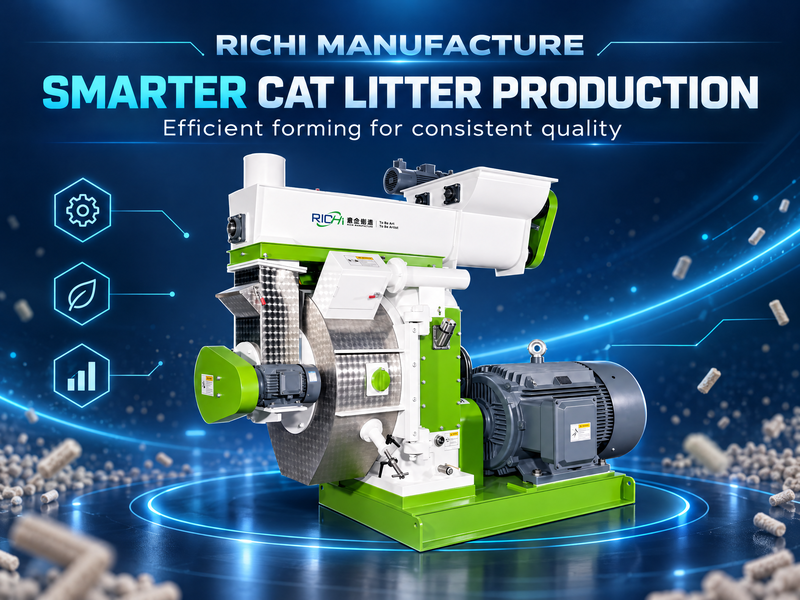
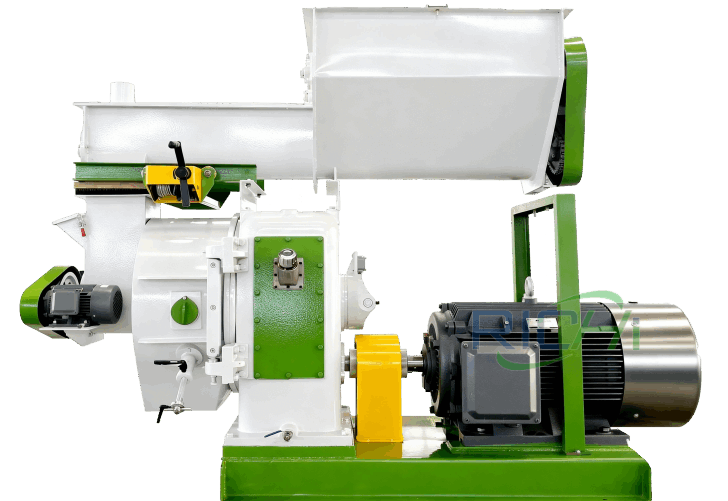
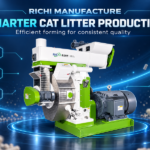
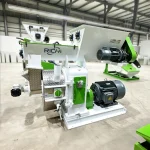
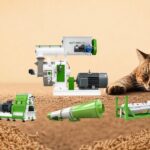
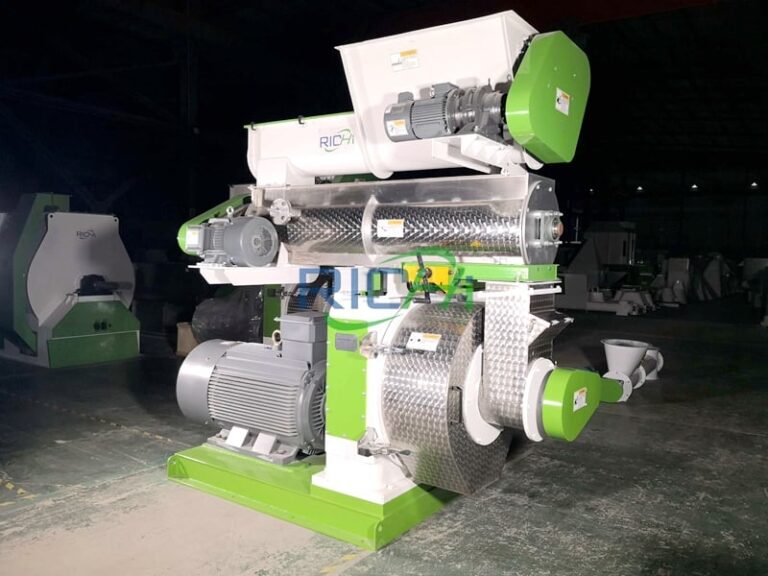
At the heart of every newspaper cat litter manufacturing line is the pellet machine, which compresses processed paper fibers into uniform pellets. For paper-based production, dry granulation equipment is typically recommended since paper materials do not require the moisture conditioning needed for tofu or bentonite litters. The MZLH series ring die pellet mills, originally designed for wood and biomass applications, have proven highly effective for paper processing when properly configured with appropriate die specifications.
The pellet machine operates on the principle of forcing prepared material through a ring die under high pressure. For newspaper processing, the die’s hole size and compression ratio must be carefully selected to achieve optimal pellet density and durability. Available models offer capacities ranging from 0.2 to 4.0 tons per hour, with ring die inner diameters from 320 to 768 millimeters. These machines produce finished pellets with diameters of 4–12 millimeters, suitable for various market applications. Key features include high-accuracy gear drives, Swiss and Japanese bearings for efficient operation, and frequency-conversion speed control for quality assurance.
Recovered paper fibers present challenges due to low lignin content and weak natural cohesion. Experienced manufacturers have developed specialized processing routes combining mechanical pulping, moisture conditioning, and binder-assisted pelletizing to address these challenges and produce consistent, high-quality pellets.
Automatic Factory Setup Considerations
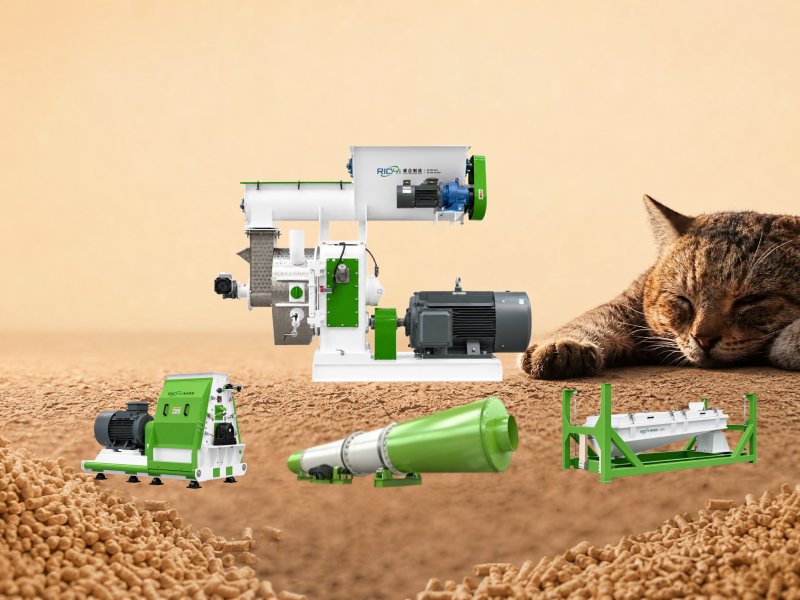
Establishing a modern production facility requires comprehensive automatic cat litter factory setup planning. A complete newspaper cat litter production line integrates multiple automated stages: raw material receiving and storage, shredding and pulping, extrusion pelletizing, drying, cooling, screening, dust collection, and automated packaging. This integrated approach minimizes manual intervention, reduces labor costs, and ensures consistent product quality across all production runs.
Raw Material Preparation Area
The production journey begins with waste newspaper collection and preparation. In industrial paper cat litter production, post-consumer newspaper is re-pulped, de-inked, and screened. During the re-pulping process, long fibers are processed back into paper, while short fibers—considered waste—are de-watered, pelletized, dried, combined with an odor-control agent, and packaged as cat litter. An automated system includes conveyors feeding material into industrial shredders that reduce newspapers to uniform strips or flakes. Magnetic separators remove any metal contaminants that could damage downstream equipment.
Automated Pelletizing System
The pellet machine is integrated into a fully automated production line, with material feeding controlled by variable-speed screw conveyors that maintain consistent throughput. For newspaper cat litter, the pelletizing process requires careful moisture control—typically achieving 25-30% moisture content before extrusion. Automated moisture monitoring systems adjust conditioning parameters in real-time, ensuring optimal pellet formation. For detailed specifications on automated control systems that optimize production efficiency, you can look here for comprehensive information on integration solutions.
Drying, Cooling and Screening Automation
Freshly formed newspaper pellets contain significant moisture that must be reduced to ensure stability and prevent degradation during storage. Automated continuous belt dryers, often operating at temperatures around 50-60°C, gently remove moisture without compromising pellet integrity. Following drying, counter-flow coolers reduce pellet temperature to ambient levels, preventing condensation during packaging and improving pellet hardness. Automated systems monitor temperature and residence time to maintain consistent product quality.
Vibrating screens separate finished newspaper cat litter from fines and oversized particles, with rejected material typically recycled back into the production process. A polishing drum further improves surface smoothness, reducing dust during transport and consumer handling.
Automated Packaging
Automated packaging systems weigh and fill bags or containers according to preset specifications, with options for various pack sizes from retail bags to bulk sacks for commercial customers. Dust collection systems throughout the packaging area ensure minimal airborne particles, maintaining a clean working environment and product integrity.
Technology Integration and Quality Assurance
Dust Control Systems
Manufacturing premium newspaper cat litter requires rigorous dust control throughout the production line. A comprehensive automatic cat litter factory setup incorporates enclosed conveying equipment, cyclone separators, and baghouse filtration to minimize airborne particles. Patented dust pelletizing systems utilize filter screens and collection chambers to achieve effective dust removal and reduce secondary pollution during cat litter production. These measures ensure the final product meets consumer expectations for low-dust performance, a key selling point for paper-based litters.
Process Control and Quality Assurance
Automated process control systems monitor critical parameters including moisture content, pellet density, particle size distribution, and temperature throughout the production cycle. Real-time data collection enables immediate adjustments to maintain consistent quality and maximize yield. For manufacturers seeking detailed control system specifications and implementation guidance, you can look here for comprehensive information on automation solutions for cat litter production.
Successful Implementation Example
Experienced manufacturers have successfully supported the installation of paper-based cat litter pellet production lines across multiple regions, responding to growing European and Asian demand for sustainable pet care products. These projects focus on converting post-consumer paper waste and cardboard fiber into biodegradable, low-dust litter pellets for retail distribution. Complete systems include paper shredding and fiber separation, dewatering press, fiber drying unit, fine milling system, ring die pellet mill, cooling and screening section, and automatic bagging line. Once operational, these facilities recycle thousands of tons of paper waste annually while supplying biodegradable litter products to regional markets.
Economic Considerations and Market Outlook
Investing in newspaper cat litter production and automatic cat litter factory setup offers attractive returns in growing markets. Across Europe, North America, and developed Asian markets, pet owners increasingly prefer environmentally responsible alternatives to traditional clay litter. Paper-based litter offers advantages including renewability, light weight, and compostability. Operating costs are competitive due to low raw material costs (recycled newspaper) and automated labor requirements. Market demand for sustainable pet products continues to grow at 8-12% annually, with paper-based litters capturing increasing market share.
Summary
Establishing a newspaper cat litter production facility with comprehensive automatic cat litter factory setup solutions offers manufacturers a strategic opportunity in the growing sustainable pet products market. The integration of advanced pellet machine technology with automated material handling, drying, screening, and packaging systems delivers consistent quality and operational efficiency. For detailed specifications and project examples, you can look here for comprehensive manufacturing solutions, or consult with experienced equipment providers to develop a production line tailored to your specific capacity requirements and raw material sources.
Check the details: https://www.richimanufacture.com/cat-litter-pellet-machine/