



Industrial feed production requires consistent material flow and close coordination between multiple processing stages. A pellet mill may be the center of the system, but its output depends on what happens before and after the pelleting chamber.
A complete animal feed pellet production line can connect raw material preparation, grinding, mixing, conditioning, pelleting, cooling, screening, and packaging into one continuous process. The exact configuration should be determined by the customer’s production objectives rather than copied from another factory.
Raw Materials Determine the Process
The first design question should be what materials the plant will process. Corn, wheat bran, soybean meal, forage, alfalfa, premix, and other ingredients may be included in different formulas.
Particle size requirements can affect the grinding section. Ingredients with higher fiber content may influence feeding and compression behavior. Moisture content can also affect conditioning and pellet formation.
Because formulas change between animal categories, the equipment should provide enough flexibility for the intended product range.
Designing the Grinding Section
Grinding reduces the size of coarse ingredients before mixing. A suitable particle size helps create a more uniform mixture and can support stable pelleting.
The grinder’s capacity should match the pelletizing section. If the grinding stage cannot prepare enough material, the pellet mill may operate below its intended rate.
For larger factories, multiple grinding machines or separate grinding lines may be used when several formulas or raw material categories need to be processed.
Mixing and Batching
Once ingredients are prepared, accurate batching and mixing become important.
A commercial formula may contain major ingredients as well as smaller quantities of premix, minerals, vitamins, or additives. The mixing system needs to distribute these components evenly throughout the batch.
Good mixing also helps maintain consistent pellet composition. If the mash is not uniform, pelletizing cannot correct the imbalance.
Conditioning Before Pelleting
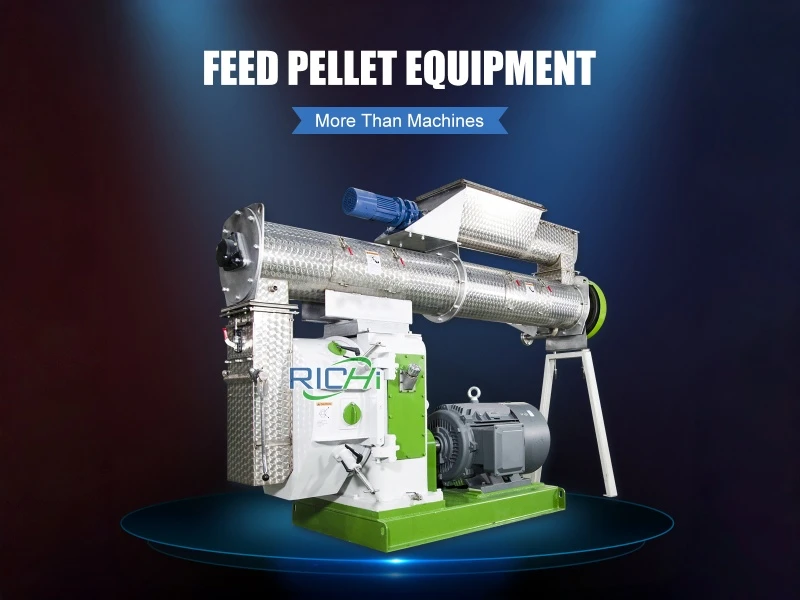
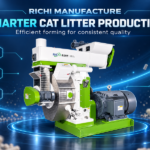
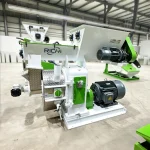
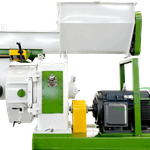
An industrial livestock feed pellet machine normally works together with a feeding and conditioning system. Steam conditioning can increase temperature and moisture before the mash enters the compression chamber.
The conditioner needs sufficient contact time and effective steam distribution. Its configuration should correspond with the feed formula and production capacity.
Proper preparation can support pellet formation and reduce process fluctuations.
Cooling and Screening
Pellets leave the pellet mill hot and need to be cooled before final handling. The cooler must be large enough to handle the output from the pelleting section.
After cooling, screening can separate fines from acceptable pellets. This improves product uniformity and can reduce the amount of loose material entering storage.
In some feed applications, additional size reduction may be required. A crumbler can be incorporated when smaller feed particles are needed.
Automation at Industrial Scale
Industrial plants often benefit from centralized control. Automated batching, feeding, temperature monitoring, conveying, and packing can reduce manual intervention.
Automation can also help operators identify abnormal conditions. If a feeder stops or a motor experiences excessive load, the control system can respond more quickly than manual monitoring alone.
However, automation should be built around a properly designed mechanical process. Control systems cannot compensate for poorly matched equipment capacities.
Evaluating the Complete System
When comparing suppliers, buyers should ask how the machines work together rather than evaluating each machine independently.
The crusher, mixer, pellet mill, cooler, screen, conveyors, and packing section should form a balanced production chain.
Customers can click reference information about equipment and project solutions when comparing industrial feed production systems.
Richi manufacture provides equipment and engineering solutions for animal feed and livestock feed projects. The final system can be adapted according to capacity, feed formulas, pellet size, raw materials, and factory requirements.
Designing for Product Changes
Industrial factories often produce more than one type of feed. The production line should therefore allow practical formula changes, die replacement, cleaning, and product storage.
The greater the product variety, the more important process planning becomes. Production schedules should minimize unnecessary changeovers while maintaining product quality.
A well-designed industrial feed system combines mechanical reliability with process flexibility. When raw material preparation, mixing, conditioning, pelleting, cooling, screening, and packaging are correctly matched, the factory can achieve more stable production and better control over finished feed quality.
view details: https://www.richimanufacture.com/animal-feed-pellet-machine-for-sale/