
With the global emphasis on sustainable agriculture and waste recycling, the organic fertilizer production line has become a practical and efficient solution for converting organic waste into high-value fertilizer products. By processing livestock manure, agricultural residues, and organic waste into stable organic fertilizer, this production line supports soil health, reduces environmental pollution, and promotes circular agriculture.
This article systematically explains the process structure, core equipment, technical advantages, and application value of an organic fertilizer production line, helping investors and manufacturers better understand this mature and scalable fertilizer solution.
1. Overview of Organic Fertilizer Production Line
1.1 Definition and Function
An organic fertilizer production line is a complete processing system designed to convert organic waste materials into usable organic fertilizer products, including organic fertilizer powder and organic fertilizer pellets. The production line integrates multiple processing stages to ensure product safety, nutrient stability, and consistent quality.
1.2 Typical Production Process
A standard organic fertilizer production line generally includes:
- Raw material collection and storage
- Compost fermentation
- Crushing and mixing
- Granulation
- Drying and cooling
- Screening and recycling
- Automatic packaging
Each stage is closely connected to ensure smooth material flow and continuous production.
2. Raw Materials and Compost Fermentation System
2.1 Applicable Raw Materials
One of the main advantages of an organic fertilizer production line is its wide raw material adaptability. Common organic materials include:
- Livestock and poultry manure
- Crop straw and agricultural residues
- Food waste and kitchen waste
- Sludge and organic municipal waste
These materials are rich in organic matter but require proper treatment before fertilizer production.
2.2 Fermentation Process and Equipment
Fermentation is the foundation of the organic fertilizer production line. Through aerobic composting, harmful bacteria, parasites, and weed seeds are eliminated. Compost turners ensure sufficient oxygen supply and uniform fermentation, accelerating decomposition and improving material stability.
3. Crushing and Mixing System
3.1 Crushing for Particle Size Control
After fermentation, organic materials often form lumps that must be crushed. Crushers in the organic fertilizer production line reduce particle size and improve material consistency, preparing the material for granulation.
3.2 Mixing for Nutrient Uniformity
The mixing system ensures even distribution of nutrients, microorganisms, and functional additives. Uniform mixing improves fertilizer effectiveness and ensures consistent product quality across batches.
4. Granulation System of Organic Fertilizer Production Line
4.1 Importance of Granulation
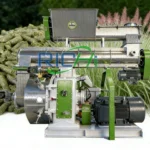
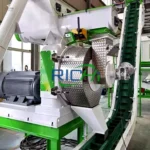
Granulation is the core stage of an organic fertilizer production line. Industrial organic fertilizer pellet making machine offers better appearance, easier handling, and improved application efficiency compared to powder fertilizer.
4.2 Common Granulation Equipment
Depending on production requirements, different granulators can be used, such as:
- Organic fertilizer pellet machines
- Disc granulators
- Drum granulators
- Extrusion granulators
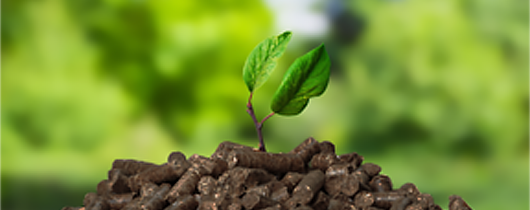
Granulated organic fertilizer releases nutrients slowly in soil, improving soil structure and long-term fertility.
5. Drying, Cooling, and Screening System
5.1 Drying for Moisture Reduction
Fresh fertilizer pellets contain high moisture content and must be dried to meet storage standards. Rotary dryers are commonly used in organic fertilizer production lines to efficiently remove excess moisture while preserving nutrients.
5.2 Cooling and Screening
Cooling systems reduce pellet temperature and prevent caking during storage. Screening machines separate qualified pellets from unqualified materials, which can be recycled back into the granulation process to improve material utilization.
6. Packaging and Automation System
6.1 Automatic Packaging Solutions
The final stage of the organic fertilizer production line is packaging. Automatic weighing and bagging systems allow fertilizers to be packed in various sizes, meeting different market demands.
6.2 Intelligent Control and Automation
Modern automatic organic fertilizer production lines adopt centralized control systems. Operators can monitor equipment operation, production capacity, and system status in real time, reducing labor costs and improving operational stability.
( Important link: https://pelletisingmachine.com/organic-fertilizer-machine/)
7. Advantages of Organic Fertilizer Production Line
An organic fertilizer production line provides multiple benefits:
- Converts organic waste into valuable fertilizer
- Reduces environmental pollution
- Improves soil fertility and crop yield
- Supports sustainable and eco-friendly agriculture
- Offers flexible capacity and scalable design
These advantages make organic fertilizer production lines suitable for farms, fertilizer plants, and environmental protection enterprises.
8. Applications and Market Prospects
Organic fertilizer produced by an organic fertilizer production line is widely used in:
- Crop farming and greenhouses
- Orchards and plantations
- Landscaping and ecological restoration
- Organic and sustainable agriculture
With increasing demand for green agricultural inputs, organic fertilizer production lines offer strong market potential and long-term investment value.
9. Conclusion
The organic fertilizer production line serves as a key bridge between organic waste management and sustainable agriculture. Through integrated fermentation, granulation, drying, and automation technologies, it enables efficient production of high-quality organic fertilizer.
For enterprises seeking environmentally responsible and profitable fertilizer solutions, investing in a professional organic fertilizer production line is a strategic and future-oriented choice.